My SpO2 Dropped to 88% Eleven Times and I Slept Right Through It
I didn’t know until the next morning, sitting at my kitchen table with coffee going cold next to me, scrolling through a CSV file on my laptop. Eleven dips below 88%. The ring never woke me. Not once. And the reason it didn’t wake me is that I hadn’t changed the default alarm threshold. I just assumed the factory settings were sensible. That was my mistake, and I’ll get to it. But first, I want to talk about why this little ring is worth your attention, and also when it’s not.
I’ve been a pharmacist long enough to remember when pulse oximeters were strictly behind the counter, things patients rented through medical supply companies. Now people hand me their phone and show me a SpO2 reading like it tells the whole story. Sometimes it does. Usually it doesn’t. Wellue’s O2Ring is popular because it tells a longer story, but only if you know how to read it.
What the O2Ring Actually Records That a Fingertip Oximeter Cannot
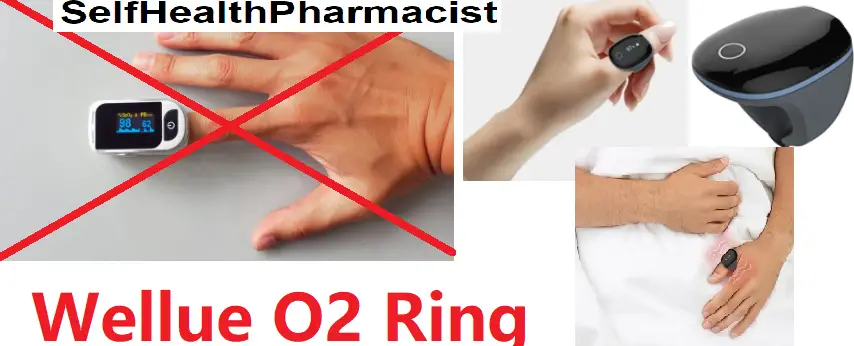
Here’s what a standard fingertip oximeter does: it shines two LEDs through your fingertip, measures how much light your red blood cells absorb, and gives you a number. Right now. You look, you note it, you take it off. A reading is a snapshot, maybe 10 seconds of data if you hold still long enough. Fine for checking in on a COPD patient mid-afternoon or confirming someone’s okay after a procedure. Nearly useless, though, for anyone trying to understand what their oxygen is doing during eight hours of sleep.
Continuous recording runs at a 4-second interval. That works out to 900 readings per hour, and across a full eight-hour night you’re looking at around 7,200 data points. Compare that to the one number you’d get from a fingertip clip. No comparison. Trend data is the whole product here. The live reading is almost beside the point.
All of that flows into the free ViHealth app (iOS and Android, no subscription required). Up to 30 days of sessions stored locally on your phone, which is genuinely useful if you’re tracking something over time or want to see whether a new CPAP pressure setting made a difference last week versus this week. Under each session’s detail screen, an “Export Data” tap gives you a raw CSV. Columns are simple: Time, SpO2%, PR bpm, and Motion index. That last column matters more than most people realize, and I’ll come back to it in the accuracy section.
Twenty grams on your finger. You forget it’s on within about fifteen minutes. A regular finger clip either slips off or my hand goes numb from the spring tension. This ring just… sits there.
Most buyers I’ve talked to, including my own sister, think they’re buying a more comfortable version of a fingertip clip. Put it on, glance at the app in the morning, see a number, move on. Never look at the CSV. Paying for trend data and ignoring it entirely. That’s the single biggest waste of the price premium on this device.
SpO2 Thresholds That Actually Matter and What the Default Alarm Gets Wrong
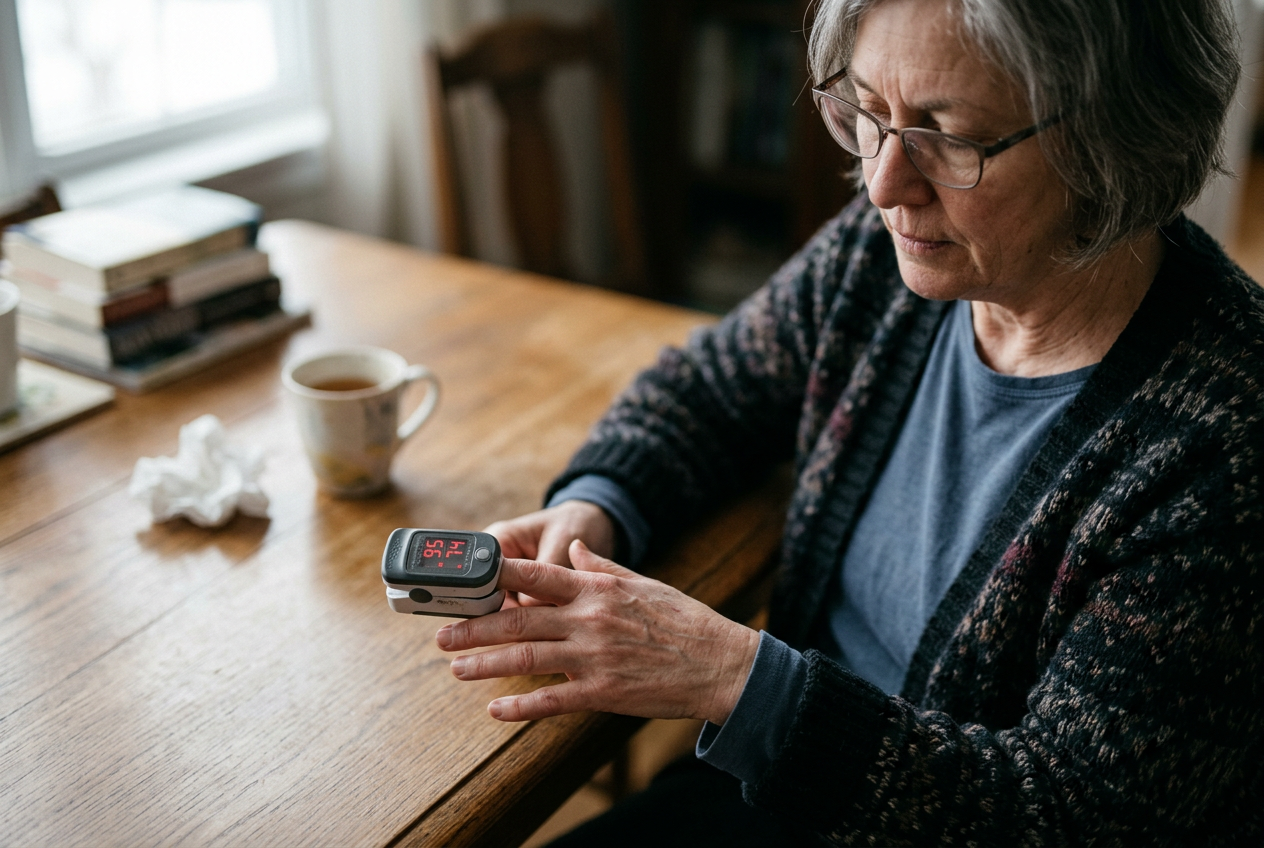
Wellue ships the O2Ring with the vibration alarm set to trigger at 90% SpO2. Being very direct about what that number means clinically: it is not a health goal. It’s a liability floor. By the time your oxygen saturation has dropped to 90%, you’ve already been in mild-to-moderate nocturnal hypoxia for some stretch of time. An alarm at 90% is telling you the building is already on fire.
Here’s how the clinical range breaks down. Mild nocturnal hypoxia runs from about 90 to 94%. Moderate is 85 to 89%. Severe is anything below 85%. The American Academy of Sleep Medicine considers an oxygen desaturation index (more on ODI in a minute) of more than 5 dips below 90% per hour as clinically significant. So if your oxygen is bouncing around between 91 and 93% all night, the factory alarm never fires, you see no alerts in the morning, and you might reasonably assume everything is fine. Not necessarily. Just not catastrophic yet.
My recommendation, and I’ll own this as an opinion: set your vibration alarm to 94%. In the app, go to Device Settings, then Alarm Settings, and slide the SpO2 threshold up to 94. You can also adjust the alarm delay, which defaults to around 10 seconds but is adjustable all the way to 60 seconds. The delay exists so a single brief movement doesn’t startle you awake unnecessarily. Mine stays at 15 seconds. Long enough to filter out a position shift, short enough to catch a real dip.
Setting at 94% means you’ll get some alerts that turn out to be nothing. Fine. Look at the motion index in the CSV afterward and filter out the noise. What you won’t do is sleep through eleven dips to 88% without a single nudge. (I learned this the expensive way. Well, not expensive in money. Expensive in sleep quality I didn’t know I was losing.)
Treating the 90% factory default as a wellness baseline is a mistake I see people make constantly. It’s the minimum threshold for something that’s already a problem.
How Accurate Is the O2Ring and Three Conditions That Break It
Wellue claims ±2% accuracy across the 70-100% SpO2 range. For a consumer wellness ring, that’s reasonable. For context, a Masimo Radical-7 (what you’d see in an ICU or surgical suite) achieves ±1.5% ARMS under controlled conditions. A real gap, but not enormous. For trend monitoring, where you’re looking at direction and pattern rather than pinpoint values, the ±2% limitation is clinically acceptable. Buying a $109 ring and expecting hospital-sensor precision means misunderstanding what the device is for.
That said, three specific conditions break the O2Ring’s accuracy, and reviews calling it “inaccurate” are almost always failing to account for at least one of them.
First: nail polish. A 660nm red LED is the standard wavelength for pulse oximetry. Dark colors, particularly dark blue, black, and green polish, absorb that wavelength in ways that throw off the reading. Gel manicures are worse because the pigment layer is thicker. One patient swore up and down the ring was broken; I asked about her nails and she had black gel on every finger. Switch to a bare finger or a light-colored polish and the problem goes away. Really is that simple, and almost never mentioned in reviews.
Second: cold fingers. When peripheral finger temperature drops below 16°C (that’s 60°F), your body starts shunting blood away from the extremities. Less blood flow through the finger means weaker signal, which inflates measurement error. Sleeping in a cold room with hands that run cold anyway means you may be getting readings that are meaningfully off during the coldest part of the night. A bedroom below about 65°F combined with naturally cold fingers is not an ideal combination for this device.
Third: motion artifact during sleep. Open the CSV and look at the Motion index column. Any value above 3 indicates that the reading for that interval is unreliable. During active REM sleep, small movements can produce SpO2 readings that are just noise. Don’t panic about a single data point showing 82% if the motion index is 4 or 5. Look at the surrounding readings and ask whether the dip is sustained or just a single corrupted interval.
Reviews that pit a single O2Ring reading against a hospital sensor, without checking whether the test finger had gel polish or the room was 58°F, are not fair comparisons. Real limitations, but specific and avoidable.
Can It Detect Sleep Apnea: The Honest, Specific Answer
No. Not exactly. Let me be more precise than that, because the answer matters.
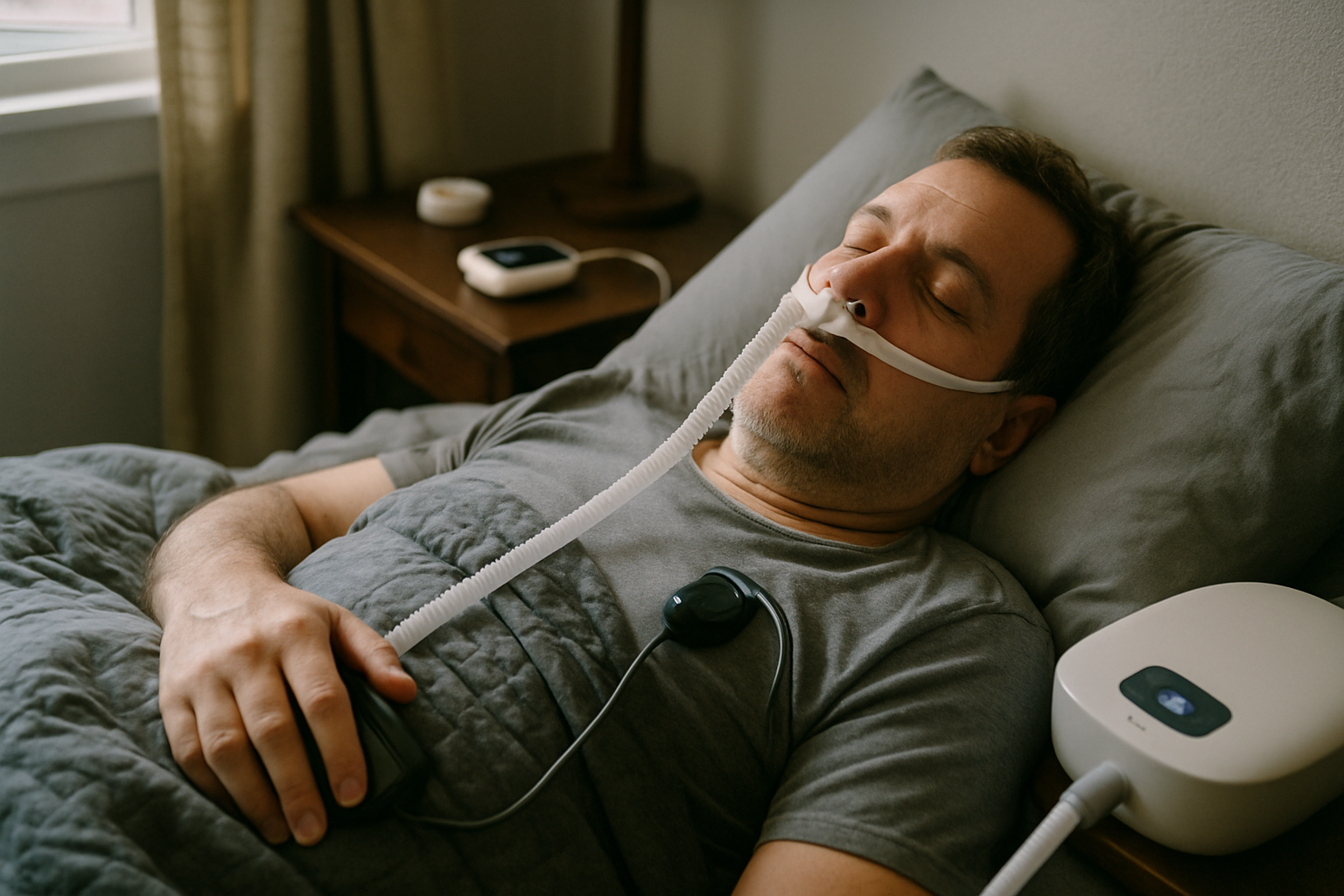
A full polysomnography measures airflow at the nose and mouth, respiratory effort via chest and abdominal belts, brainwave activity through EEG, muscle movement via EMG, leg movement, eye movement, and yes, SpO2. Cause and effect together. Two things come from the O2Ring: SpO2 and pulse rate. No way to detect airflow or respiratory effort. No way to distinguish whether your oxygen dropped because you stopped breathing, because you rolled onto your side and your airway partially closed, or because of some other reason for nocturnal hypoxia entirely. Obstructive versus central sleep apnea require completely different treatments, and this ring cannot tell them apart.
What it can measure is the oxygen desaturation index, ODI. Specifically ODI-4, which counts the number of times per hour your SpO2 drops 4% or more from baseline. And there is a meaningful correlation between ODI and AHI (apnea-hypopnea index, the standard sleep apnea severity measure). A 2019 study in CHEST journal, with 234 subjects, found a correlation of r=0.89 between ODI and AHI. Strong relationship. Doesn’t mean they’re the same number, but an elevated ODI is a real signal worth investigating. For reference, an AHI above 5 events per hour is the AASM’s threshold for mild obstructive sleep apnea.
So here’s what I actually tell people: if your O2Ring shows an ODI above 5 on more than one night, print that report, bring it to your GP, and ask about a sleep study referral. A home sleep study in the US runs somewhere between $150 and $400. Full in-lab polysomnography can be $1,000 to $3,500 out of pocket if your insurance is unhelpful about it. A few nights of logged ODI data is a much better conversation-starter with your doctor than “I feel tired in the mornings.”
What you cannot say, and what I won’t say, is that the ring detects sleep apnea. Someone whose ODI looks normal might still have significant respiratory events that don’t drop their oxygen dramatically. One piece of evidence. Not the whole picture.
O2Ring vs Its Real Competitors: Price, Data Access, and What Each Gets Wrong
Retail price is $109 on Amazon and $99 direct from Wellue’s website. Buying direct when the price difference is real makes sense to me. Same device, same warranty, no margin going to a third party.
Withings ScanWatch is $299 and genuinely a beautiful device. Almost bought one. Raw SpO2 CSV export is locked behind a Health Mate premium subscription at $9.95 per month. For someone who wants to trend overnight data seriously, that’s a recurring cost layered on top of an already expensive device. Charging you monthly to see your own raw health data in full is a business model decision, not a technical limitation. Annoyed enough by that to take Withings off my list entirely.
Garmin includes wrist-based pulse oximetry on several watches in the $199-$499 range. Hardware is fine, activity tracking is excellent, and if you’re already a Garmin person you know the platform well. A 2021 study in JMIR found that Garmin wrist oximetry had a mean error of 2.8% compared to finger oximeters. Part of that is physics. Higher arterial density in the finger gives a cleaner photoplethysmography signal than the wrist. For overnight SpO2 trend monitoring specifically, wrist sensors are at a structural disadvantage.
Lookee Ring comes in around $79 and is the obvious budget comparison. No vibration alarm on the base model. For passive overnight logging it’s adequate, but trying to set an early-warning threshold at 94% and actually be woken when something’s happening, that base version won’t do it. Lookee models with alarms start creeping toward O2Ring territory in price anyway.
Free CSV export, no subscription, a functional vibration alarm, 16 hours of continuous monitoring, and a price under $110. For this specific purpose, overnight SpO2 trend data without a paywall, the value is hard to beat. Not a compliment I give casually. The Withings ScanWatch has features the O2Ring doesn’t come close to. But for overnight trend monitoring, O2Ring wins.
Battery Life: What Wellue Claims vs What a Full Night Actually Drains
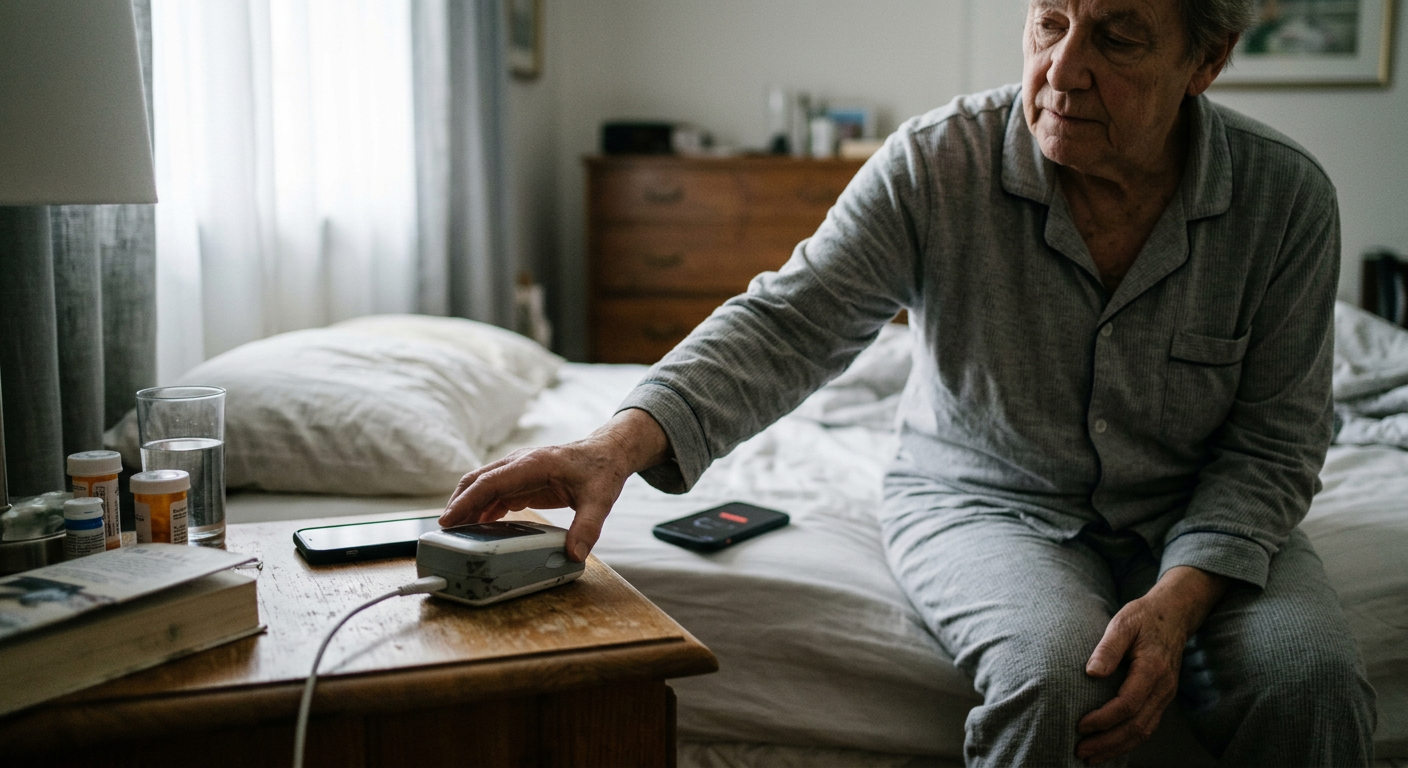
Wellue advertises up to 36 hours of battery life. Not a lie, exactly. That’s the standby figure. Wear it doing nothing, no active logging, and it’ll sit there for 36 hours. A big number in the marketing because it’s the biggest number available. Not the number that matters for how you’ll actually use this device.
Continuous monitoring mode, which is what you want for sleep tracking, gets you approximately 16 hours in practice. With the vibration alarm active and firing occasionally, I see closer to 10-12 hours of real-world life before it starts complaining. Enough for a full night plus most of a next-day nap. But barely. Anyone who forgets to charge before bed and expects 36 hours of logging will run out of battery somewhere around hour 14 and have a gap in their data at the most clinically interesting part of the night. Early morning, when REM cycles are longest and desaturation events tend to cluster.
USB-C charge time from zero to full is about 2 hours. Plug it in when you wake up, it’s ready by the time you’ve had breakfast. Real issue is that the battery is sealed, not user-replaceable. Capacity listed in the FCC filing is 65mAh. Small. Over two or three years of daily charging cycles, lithium-ion cells at that capacity will degrade. No swapping in a fresh cell. When battery life gets short enough to become unreliable, you’re buying a new ring. Biggest long-term ownership risk with this device, and I wish Wellue would be more upfront about it.
My habit: charge it every single morning without exception. Takes it off the table as a variable entirely.
Reading Your Overnight Report: What the Four Numbers Actually Mean
Open the ViHealth app, tap last night’s session, and you’ll see a summary screen with several metrics. Most people look at the mean SpO2, see it’s 96%, notice a green “Normal” banner, and put their phone down. A banner looks reassuring and the number looks fine. But that banner is based primarily on mean SpO2, and mean SpO2 can be completely normal while you’re still having significant desaturation events. Please don’t close the app after the banner.
Here are the four numbers worth your attention.
Mean SpO2 is your average oxygen level across the recording session. Normal nocturnal mean SpO2 runs 95-100%. Consistently below 95% is worth discussing with a doctor. At 93% or lower on multiple nights, worth discussing soon.
Lowest SpO2 is the floor, the single worst reading of the night. A one-time dip to 92% during a position change is different from a sustained floor of 88%. To understand which it is, look at the trend graph or the CSV. A V-shaped spike down and back up is often motion artifact or a brief position change. A U-shape that stays low for several minutes is more meaningful.
ODI4 is the oxygen desaturation index, counted as the number of times per hour your SpO2 drops 4% or more from your baseline. This is the number your GP will focus on. A value below 5 is generally considered normal. Between 5 and 15 is mild. Above 15 starts looking like moderate territory, and above 30 is severe. An ODI4 above 15 on multiple nights, or time below 90% exceeding 1% of your total sleep time, those are two specific triggers where most GPs will take action, ordering a proper sleep study at minimum.
Time below 90% is expressed as a percentage of your total recording time. Even small percentages add up: 1% of an eight-hour night is nearly 5 minutes of sub-90% oxygen. Not trivial. Often gets ignored because a percentage sounds small until you translate it into actual minutes.
For your GP appointment: screenshot the ODI4 and the time-below-90% figures specifically. Auto-generated PDF reports are cleaner and more legible than a CSV printout for a clinical conversation. CSV is better if you or your doctor want to dig into raw timestamps and filter by motion index. For a first appointment, PDF is fine.
Don’t let the green banner be the end of your review. It’s the beginning.
Who Should Not Buy the O2Ring: Cases Where a Different Tool Is the Right Call
I want to be honest here because too many reviews skip this part entirely.
Raynaud’s syndrome or significant peripheral vascular disease means readings can be meaningfully wrong. During a Raynaud’s episode, peripheral SpO2 can read 3 to 5 percentage points lower than your actual central saturation. Measuring a compromised finger gives you a compromised signal. Not a flaw in the device so much as a physics limitation. Anyone with significant peripheral vascular disease should be having these conversations with their care team rather than self-monitoring with a consumer wellness device.
Primarily needing daytime spot-checks, asthma, COPD, or heart failure and wanting to check your oxygen while going about your day, a standard fingertip oximeter does that job perfectly well for $20 to $30. O2Ring’s value is specifically overnight trend data. Don’t pay for what you won’t use.
Gel manicures or nail extensions you’re not willing to remove: dark pigment and thickness interfere with the 660nm red LED significantly. Try a bare finger if one is available, but if all your fingers are done and staying done, the O2Ring isn’t a practical choice right now.
Pediatric use. Adult sizing accommodates a finger circumference of 42 to 68mm. Children’s fingers are smaller. Wellue makes a Kids Fingertip Oximeter (around $29) properly sized for fingers under 42mm circumference. Don’t try to make the adult ring work on a small child’s hand. Loose fit on a small finger gives unreliable readings.
On FDA classification, worth addressing carefully. O2Ring is not FDA 510(k) cleared as a diagnostic device. General wellness clearance is what it holds, which requires substantially less clinical validation than a Class II diagnostic device would. Not a scandal. General wellness is an honest category for a product that helps healthy people track trends. Marketing materials and online reviews routinely blur the line between wellness monitoring and medical diagnosis, though. Wellue’s own copy is not entirely blameless here. General wellness clearance means basic safety and labeling requirements have been met. Validated against clinical gold standards the way a diagnostic device would be? No.
Assuming FDA clearance means diagnostic-grade is a mistake that can lead to real harm, specifically, false reassurance when someone with actual sleep pathology sees a “Normal” banner and delays getting a proper evaluation.
A genuinely useful tool for the right person. Eight hours of logged trend data, free CSV export, a configurable alarm, and a price under $110 with no subscription. Hard to beat for overnight SpO2 monitoring. Works best when you understand exactly what it is, what those four morning numbers actually mean, and what it cannot tell you no matter how many nights you wear it.