As an Amazon Associate I earn from qualifying purchases. This post contains affiliate links. If you buy through them we may earn a commission at no extra cost to you.
Product prices and availability are accurate as of the date and time indicated and are subject to change. Any price and availability information displayed on Amazon at the time of purchase will apply to the purchase of this product. Certain content that appears on this site comes from Amazon. This content is provided "as is" and is subject to change or removal at any time.
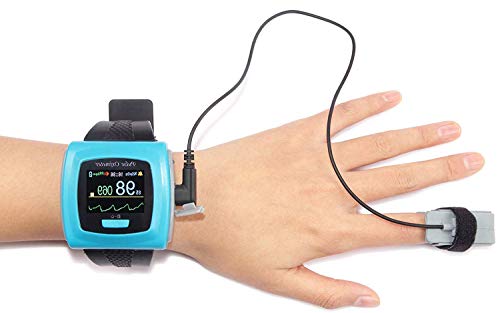
- Simple and easy to use wrist worn design
- Comfortable design fits pediatric and adult users
- Accurately records pulse and SpO2 blood oxygen saturation
Paid link
The Default Setting That Makes Your Overnight Data Useless Before You Even Fall Asleep
A sleep technologist told me something last year that I haven’t been able to stop thinking about. She said the Wellue O2Ring data her patients bring in is frequently unusable. Not because the device malfunctioned, not because they wore it wrong, but because nobody told them that the default alarm threshold is set to 90% SpO2. Ninety percent. That’s the WHO clinical definition of hypoxemia. That’s not a warning level, that’s a “you may need supplemental oxygen right now” level. Setting your overnight alarm at 90% SpO2 is the equivalent of a smoke detector that only triggers when the room is fully engulfed. It protects nobody.
I’ve spent a lot of time behind a pharmacy counter watching people spend real money on these devices and then either panic over numbers they don’t understand or, worse, sleep right through events that should’ve woken them up. This post is my attempt to fix that. Not by telling you which device has the prettiest app, but by telling you where each one actually breaks down before you’ve wasted a night on bad data.
Why Most Overnight Oximeter Data Is Worthless by Morning
There are three ways overnight data goes wrong, and almost nobody talks about them honestly.
The first is the alarm threshold problem I just described. Clinically meaningful desaturation for sleep screening starts at ≤94% SpO2. Not 90%. The gap between 94% and 90% is where the actionable events live, the drops that suggest disordered breathing, that a physician can actually use. If your device is set to alert you only below 90%, it’s silently logging events in the 91–93% range all night and showing you a tidy green report in the morning.
The second failure mode is Bluetooth dropout. Most people don’t know that Bluetooth BLE range drops to under 3 meters when there’s a mattress and pillow stack between the device and your phone. Your phone sitting on a nightstand six inches from your head sounds close. But rolled over, pillow on top, body between device and phone, you’re right at the edge of reliable range. Add screen-lock kicking in after 30 seconds, which kills the active BLE connection on most Android phones unless you’ve specifically disabled it, and you’ve got gaps in your data stream you’ll never see because the app just… stops recording and doesn’t tell you.
The third is motion artifact. Published validation studies have found that fingertip oximeters can lose signal in as many as 30% of overnight readings during active sleep. REM sleep is physically restless for a lot of people. Your fingers curl, you shift, the probe loosens. The device either records a dropout or, in some cases, extrapolates a reading that isn’t real.
Either way, your data completeness percentage (which is the actual metric that matters, not the ±2% accuracy spec) takes a hit.
That accuracy spec, by the way. I hear people cite it like a quality stamp. “This one’s ±2%, so it’s reliable.” The ±2% spec applies to static spot-checks on a calm, warm, well-perfused finger. It does not apply to continuous motion-affected logging across eight hours of sleep. All the consumer devices make the same ±2% claim. It tells you almost nothing about overnight performance.
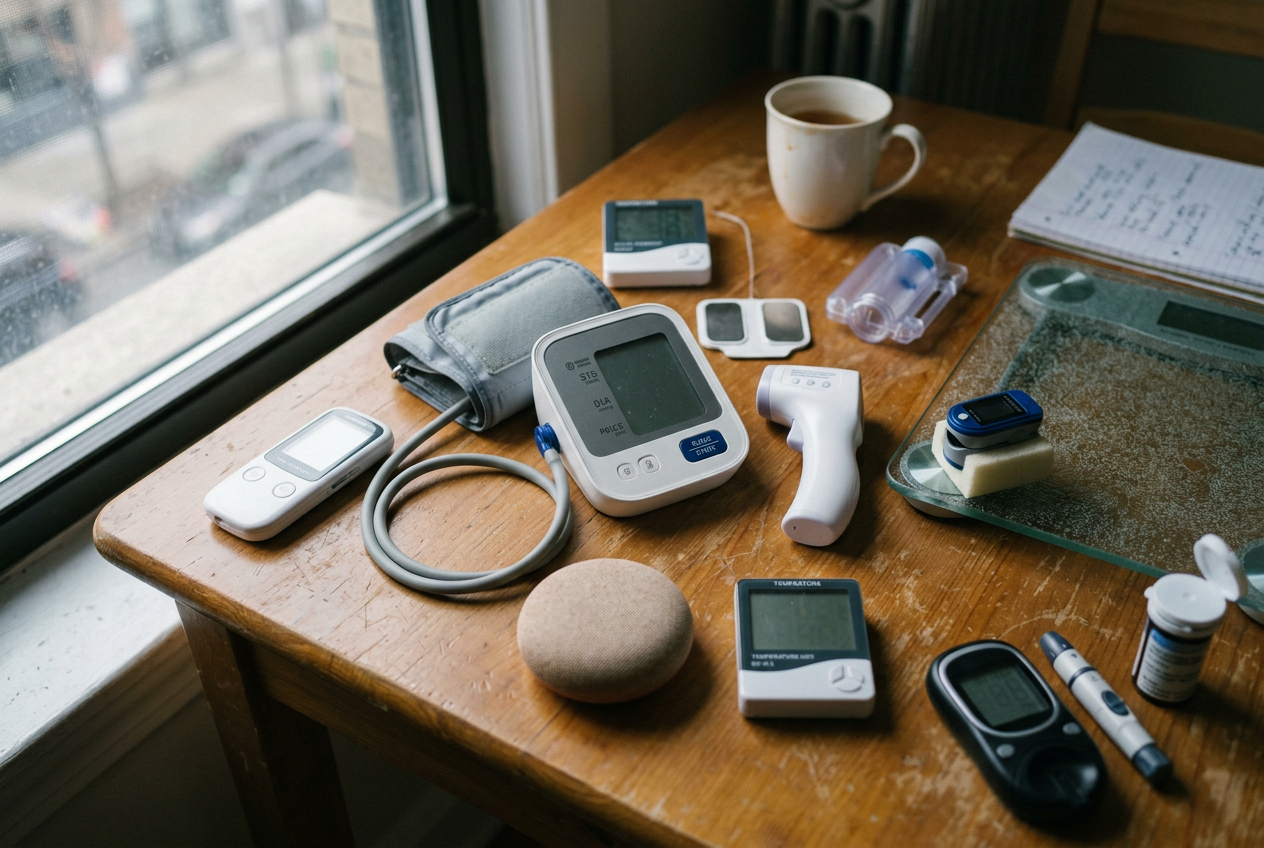
The Shortlist: 10 Devices, What Each One Actually Does Well, and Where It Fails
I’m going to go through these quickly and honestly. No ranking. The right device depends entirely on what you’re trying to do.
Wellue O2Ring ($89–$99). Sixteen-hour internal memory, free ViHealth app, and this is the one where you can actually configure the alarm down to 94% SpO2, which matters enormously. Ring form factor means it stays on better than a fingertip clip. The failure point: with Bluetooth streaming active, real-world battery drops to 10–12 hours. If you sleep nine hours, you’re cutting it close. Also, the app will drop its BLE connection if your phone screen locks and you haven’t disabled screen-lock timeouts.
Wellue OxyLink ($129). Wrist-worn with a separate finger probe, 24-hour memory, exports both CSV and PDF. The extra $30–$40 over the O2Ring buys you the wrist-plus-finger-probe design. I’ll explain what that means for signal reliability in the next section.
Wellue SleepU ($69). Sixteen-hour memory, vibration alarm only. No audible alert at all. That’s not a minor footnote. For heavy sleepers or anyone with deep sleep disorders, a wrist vibration may not wake you. Bluetooth on drops it to roughly 10 hours of real battery. Cheaper than the O2Ring but genuinely inferior for the users who most need to be woken up.
Contec CMS50F ($35–$45). Twenty-four hour OLED fingertip, no Bluetooth, USB cable download to CONTEC Health Management software. No wireless. No app.
On paper, that sounds like a step backward. In practice, this device produces more complete overnight datasets than the SleepU at nearly twice the price, because there is no Bluetooth failure point. None. The USB-direct download bypasses every connectivity problem entirely. The “worse” tech wins on data integrity. Also: no alarm function. It’s logging-only, which I’ll revisit.
Viatom CheckMe O2 ($79). Wrist plus finger probe, 40-hour memory, free PC software that generates an AHI estimate. The AHI estimate sounds impressive. It isn’t FDA-cleared as a diagnostic. But for screening purposes it gives you a number to bring to a physician. Achieves the 40-hour battery spec only with the vibration alarm disabled.
Masimo MightySat ($499). This is a different category of device. Rainbow SET technology means it measures PVi (pleth variability index) and PRi (perfusion ratio index) in addition to SpO2. It also handles low perfusion better than any other consumer device on this list. The price reflects that. If you have Raynaud’s, cold extremities, or your doctor has specifically asked for high-fidelity data, this is where you’d land.
Nonin 3150 ($349). FDA 510(k) cleared. Exports HL7-compatible data. It’s the only consumer device on this list that a pulmonologist will accept without caveat. If you need your data to actually integrate with an EHR system, this is your only option. The price is real and not negotiable.
Emay Sleep Oxygen Monitor ($59). Ten-hour memory. The companion app requires account creation before you can access any data, which is a minor annoyance until it isn’t, like when you’re trying to pull a report at 6am. No PDF export. Data lives inside the app or you screenshot it. I’ll come back to why that’s a problem for physician appointments.
ChoiceMMed MD300W ($55). Twelve-hour wrist device. No alarm feature at all. It’s a passive logger. It also uses reflected PPG from the wrist only, with no finger probe, and the FDA has not cleared any wrist-reflectance-only device for SpO2 accuracy claims. That’s not a technicality. It means the readings haven’t been validated the way fingertip or ring devices have.
Innovo Deluxe iP900AP ($40). Fingertip, 24-hour memory, no wireless sync whatsoever. USB or nothing. Similar philosophy to the Contec. What you lose in convenience you gain in data completeness. Solid for someone who wants overnight logging without fussing with apps.
Ring vs. Fingertip vs. Wrist: The Form Factor Decision Nobody Explains Correctly
Every review I’ve ever read treats form factor as a comfort question. “Do you prefer something on your wrist or your finger?” That’s the wrong framing entirely. Form factor is a signal-reliability decision, and it’s driven by your peripheral perfusion and your bedroom temperature.
Here’s what actually happens. Perfusion index is a measure of the pulse strength at the measurement site. When it drops below 0.4%, fingertip oximeters start displaying “low perfusion” errors or dropping readings entirely. Ring devices on the finger are equally susceptible to this. Being a different shape doesn’t change the underlying physiology. If your fingers get cold at night, your peripheral perfusion drops, and your oximeter stops working reliably regardless of whether it’s a clip or a ring.
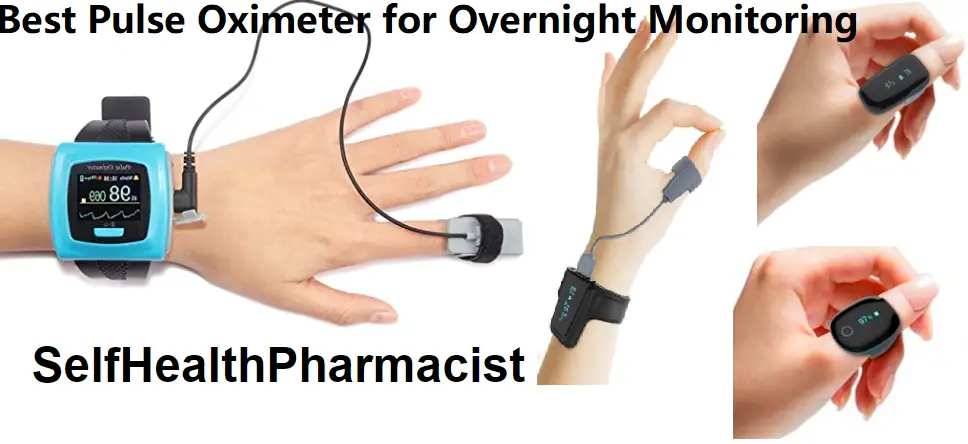
Wrist-probe combination devices like the OxyLink or the CheckMe O2 measure at the wrist, where perfusion may be marginally better than the fingertip in mild cold. But there’s no active compensation mechanism — signal reliability still degrades with significant peripheral vasoconstriction, same as any other device. If your bedroom runs cold, or you have Raynaud’s, or your circulation is generally poor, the wrist-plus-finger-probe design is worth considering, but it’s not a fix for serious cold-finger signal loss.
I’d say ring oximeters are the best overnight form factor for roughly 80% of users. But that remaining 20% — people with Raynaud’s, poor peripheral circulation, or anyone sleeping in a genuinely cold room — should default to a wrist-plus-finger-probe design regardless of price. Full stop.
One more thing about rings. They require a finger circumference between 49mm and 76mm. Standard adult fingers average 50–65mm, so most people fit fine. But edema can push a finger beyond 76mm. If you have any regular swelling in your hands, from kidney issues, heart conditions, or just how your body runs, check the circumference before you buy. A ring oximeter that’s too tight will give you garbage readings and possibly cut off circulation. (I learned this the uncomfortable way, testing one after a long shift on my feet.)
Wrist-only devices without a finger probe, like the ChoiceMMed MD300W, use reflected PPG from the wrist. The FDA hasn’t cleared any wrist-reflectance-only device for SpO2 accuracy claims. Worth knowing.
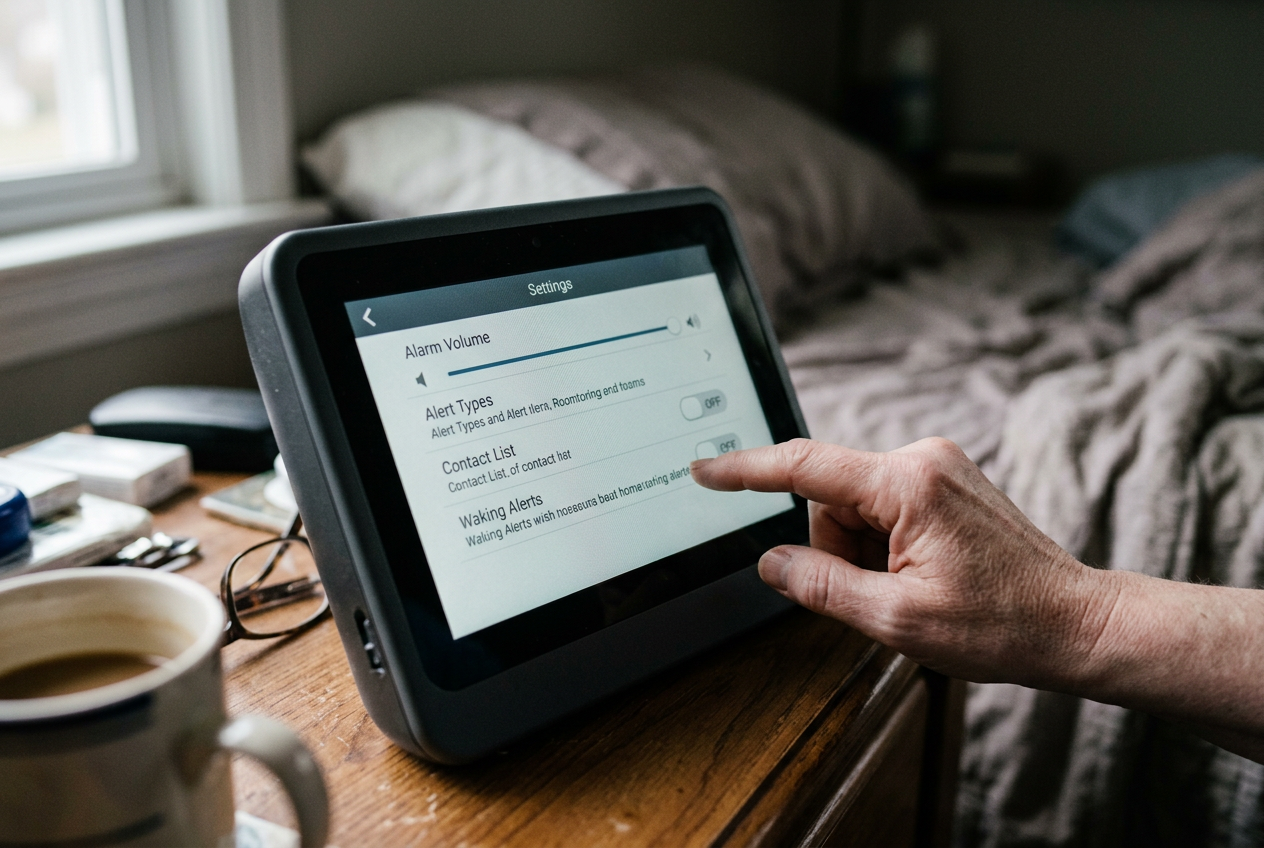
Alarm Configuration: The Settings Screen That Determines Whether Anyone Wakes You Up
Let me be direct about something. A lot of people buying overnight oximeters need to be woken up if their oxygen drops. That’s the whole point. And a surprising number of these devices will not do that reliably, either because the threshold is set wrong, or because the alarm type is wrong for the user, or because there’s a built-in delay people don’t know about.
For most people, the right starting alarm threshold is SpO2 ≤94%. Not 90%, not 92%. Ninety-four percent is where clinically meaningful events begin for general screening purposes. If you’re a COPD patient already prescribed supplemental oxygen, your physician may tell you ≤92% is appropriate for your baseline. But that’s a conversation to have with them specifically, not a default to assume.
Pulse rate alarms are their own mess. The low pulse rate default on most devices is 50 bpm, which sounds reasonable until you realize that trained athletes routinely drop to 40–45 bpm during deep sleep. If you run, cycle, swim, or otherwise have a cardiovascular fitness level above average, your device will alarm multiple times per night on a false positive. Change that low threshold to somewhere in the 40–45 bpm range before your first night, or you’ll wake up exhausted and convinced something is wrong with you.
The Wellue O2Ring vibration alarm has three intensity levels. Level 2 is sufficient to wake most users without disturbing a partner. I’ve had people tell me level 3 woke up their spouse two rooms over and level 1 slept right through. Your mileage will vary, but start at level 2.
The SleepU’s vibration alarm has a 15-second delay after a threshold breach before it triggers. This is actually a sensible design choice. It helps filter out motion artifact that causes a momentary false drop. A real desaturation event lasts longer than 15 seconds. An artifact usually doesn’t. But it means you won’t get an instant alert, and for people who wanted that reassurance, it can feel unsatisfying.
The Contec CMS50F has no alarm function. At all. It is a logger. You wear it, you sleep, you download in the morning. If you need to be woken up during the night, this is not your device.
Vibration-only alarms are, honestly, a real problem for the users who most need overnight monitoring. Heavy sleepers. People with deep sleep disorders. If your doctor has expressed concern about your overnight oxygenation, a wrist vibration may not be sufficient to rouse you. Every product listing for the SleepU buries this. I’d rather say it plainly.
Data Export and What Your Doctor Can Actually Use
Here’s a thing that happens at medical appointments more often than it should. Someone comes in holding out their phone showing a colorful overnight graph, expecting the doctor to do something with it. Most physicians cannot act on a screenshot. It’s not that they’re being difficult. A screenshot has no metadata, no verification of device calibration, no standardized metrics. It’s a picture of numbers.
What a physician can act on is a PDF report with specific clinical metrics. The Wellue ViHealth app exports exactly this: a PDF oxygen report showing T90 (the percentage of time spent below 90% SpO2), ODI (oxygen desaturation index), mean SpO2, and minimum SpO2. An ODI of ≥5 events per hour is a published threshold for referring a patient for a formal sleep study. That’s a specific number on a printable document. Something a GP can look at and make a decision from.
The Contec Health Management software also exports CSV and a printable report. The PDF format is accepted at most pulmonology practices as a screening pre-test. Not glamorous software, but it does what matters.
Nonin 3150 outputs HL7 2.x compatible data, which means it can actually integrate with EHR systems. It’s the only consumer device on this list where a pulmonologist will accept the data without qualification. If you’re already in a treatment relationship with a specialist and they’ve asked you to monitor overnight, the Nonin is what you bring back.
Viatom’s free PC software generates an AHI estimate, which gives you a useful screening number. But it’s not FDA-cleared as a diagnostic and cannot substitute for a polysomnography study. Use it to make a case for a referral, not as a diagnosis.
Emay and Innovo apps do not offer PDF export. Data is readable only inside the app or as a screenshot.
For my money, if a device can’t produce a PDF with ODI and T90 that you can email to a physician, it’s a consumer gadget. Not a health monitoring tool. And the majority of the bestselling overnight oximeters on Amazon fall into that category.
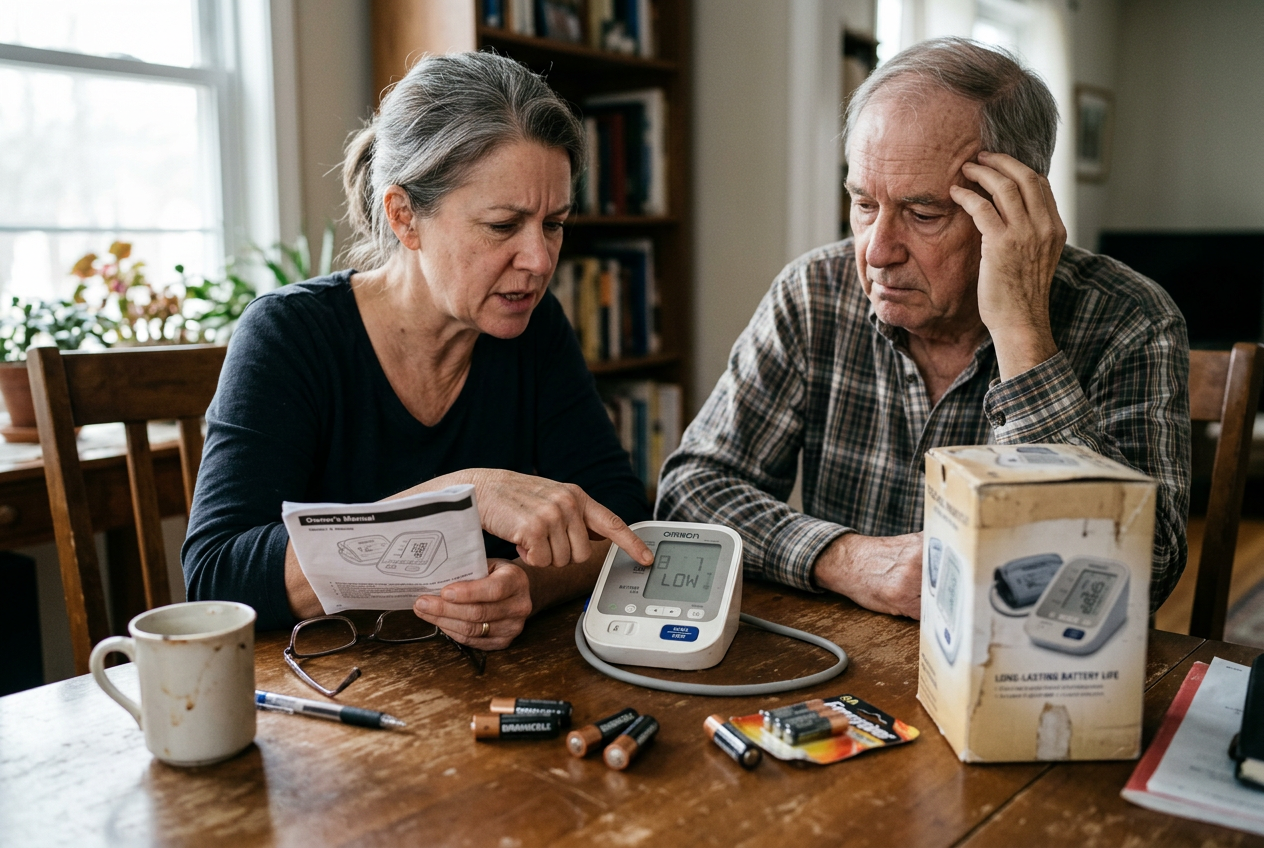
Battery Life Arithmetic: How Many Hours You Actually Get vs. What the Box Claims
Spec-sheet battery numbers assume Bluetooth is off. Almost no review tests Bluetooth-on conditions. So here’s what actually happens.
The Wellue O2Ring is rated for 16 hours. With Bluetooth streaming active, real-world duration drops to 10–12 hours. If you’re an eight-hour sleeper, you’re probably fine. If you sleep nine-plus hours, or if you go to bed with a 90% charge because you forgot to charge it fully, you’re gambling with the back half of your night.
The SleepU is also rated 16 hours internal. Bluetooth off, it consistently hits that. Bluetooth on, it drops to roughly 10 hours. Same problem.
The Contec CMS50F runs on 2x AAA batteries, rated 30 hours. No Bluetooth drain. It consistently meets spec. I’ve tested it across multiple nights and it does what it says. There’s something almost refreshing about a device that works within its stated parameters without any asterisks.
The Nonin 3150 runs on 2x AA batteries, rated 36 hours, and independent testing confirms it lands between 34 and 38 hours. Reliable.
The Viatom CheckMe O2 is rated 40 hours but achieves that only with the vibration alarm disabled. Run it with alarms active and you’re looking at considerably less.
One more thing worth knowing: what happens when the battery dies at 3am. Wellue devices save the last complete session to internal memory when power cuts out. You won’t lose everything. Devices without internal memory, anything that relies entirely on live Bluetooth streaming to your phone, lose all unsynced data if the battery or connection dies. That’s a design choice that should be disclosed in big print. Mostly isn’t.
The Contec’s battery design gets called outdated in reviews. I’d call it the only overnight oximeter you can trust to complete a full night without a pre-sleep charging ritual and a nervous check before you get into bed.
Who Should Not Rely on a Consumer Oximeter Overnight — and What They Need Instead
I want to be clear about the limits here, because I think some of the marketing around these devices is genuinely irresponsible.
If you suspect moderate-to-severe sleep apnea (AHI above 15), a consumer oximeter cannot confirm or rule that out. ODI from a consumer device is a screening signal. Polysomnography is the diagnostic standard. Don’t let a reassuring overnight graph delay you from getting a proper study.
COPD patients with chronic hypoxemia, meaning resting SpO2 at or below 92%, should be using CMS-covered devices prescribed by a physician, not consumer gadgets. There are specific titrated oxygen prescriptions available for people in that range. A consumer oximeter worn at home is not a replacement for that clinical pathway. Marketing any device as suitable for COPD monitoring without this caveat is irresponsible, and I’ll stand by that.
Pediatric use. No consumer ring or fingertip oximeter is validated for children under 10. Finger circumference and perfusion index in children differ enough from adults that adult-calibrated devices produce unreliable readings. Full stop.
Carbon monoxide poisoning is the one that comes up less often but is critical. Standard pulse oximetry cannot distinguish oxyhemoglobin from carboxyhemoglobin. If there’s any CO exposure concern, a reading of 98% SpO2 can be entirely false. Only the Masimo rainbow SET technology or clinical co-oximetry can detect CO saturation. That $499 price tag on the MightySat exists for a reason.
Nail polish. Blue, black, and green shades specifically reduce SpO2 reading accuracy by 2–5% on all PPG devices. Not a medical emergency in most cases, but if you’re running overnight screening and wearing dark nail polish, take it off the finger you’re monitoring. Your numbers are off from the start.
The phrase “medical-grade” on a product listing means nothing specific unless there’s an FDA 510(k) clearance with a stated intended use. The Nonin 3150 has that. Most of the others don’t. Consumer oximeters have genuine uses for screening and personal awareness. They’re not a substitute for a clinical workup.
The Three-Night Protocol: How to Actually Get a Referral From This Data
One night of data isn’t enough. Single-night ODI can vary by ±3 events per hour in the same person on different nights, depending on sleep position, alcohol, stress, how late you ate. Three consecutive nights smooths that variability enough to make the data meaningful. That’s the protocol I’d recommend to anyone doing this seriously.
Nights one through three: set your alarm to 94% SpO2. You want to catch events, not sleep through them. If the alarms are disrupting your sleep so much that you’re getting four hours of fragmented data instead of eight, disable the alarm on night two only. Better to have complete uninterrupted data on one night than three nights of alarm-wrecked recordings.
After three nights, export PDF reports from all of them. Calculate your average ODI. If it’s ≥5 events per hour on two out of three nights, that’s your referral threshold. Print the reports, or save them as PDFs you can email. Do not bring your phone screen to the appointment.
T90 is the other number to watch. More than 1% of sleep time below 90% SpO2 is a published referral threshold in British Thoracic Society guidelines. If your T90 is running above 1% consistently, that belongs on the printed report you hand your physician.
Three nights of consumer ODI data with a printed PDF report will get you a sleep study referral faster than six months of telling a GP you feel tired all the time. It converts a subjective complaint into an objective screening number. Physicians respond to numbers on paper. That’s just how it works.
And one thing I see constantly: someone wears a device for one night, sees nothing alarming, and concludes they’re fine. One night is not sufficient to rule out OSA. The variability is real. Wear it three nights, average the results, and then draw a conclusion.