As an Amazon Associate I earn from qualifying purchases. This post contains affiliate links. If you buy through them we may earn a commission at no extra cost to you.
Product prices and availability are accurate as of the date and time indicated and are subject to change. Any price and availability information displayed on Amazon at the time of purchase will apply to the purchase of this product. Certain content that appears on this site comes from Amazon. This content is provided "as is" and is subject to change or removal at any time.
Taking care of CPAP equipment is vital for sleep apnea patients to benefit the most from CPAP therapy (as I discussed in my post about sleep apnea).
Proper and routine care for CPAP machine cleaning and disinfecting will help:
- Prevent growth of bacteria and mold
- Prevent sickness and infection (eg, pneumonia or bronchitis)
- Keep device and equipment working properly
- Prolong the life of the equipment
First and foremost, CPAP machines should come with instructions for care, so patients should familiarize themselves with these instructions when they first get their machine.
How to clean CPAP equipment
Note: bleach, harsh soaps, antibacterial solutions, or alcohol-based solutions should never be used to clean CPAP masks, tubing, or related equipment to avoid damage.
There are many parts and accessories that come with CPAP machines, and each has its own proper guidance for cleaning and care:
CPAP mask
Mask cushions should be washed daily using warm, soap water or CPAP equipment-specific wipes or cleaners. After washing, they should be rinsed with water and allowed to air dry (out of direct sunlight).
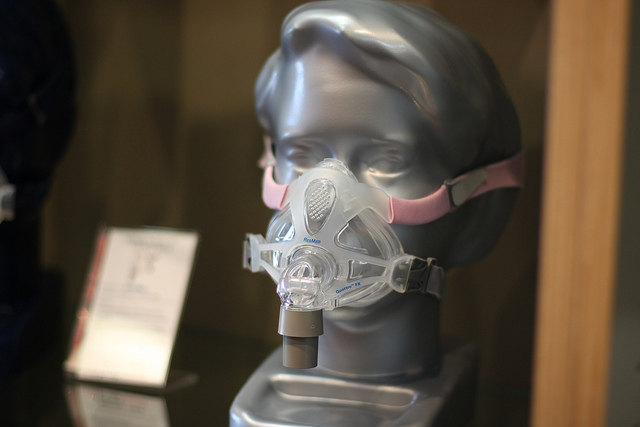
When using masks, they should be placed on clean skin, free of makeup, oils and moisturizers.
This is because most mask cushions are made of silicone, which can be broken down faster by facial oils and moisturizers.
Once a week, the mask frame should be soaked in a white vinegar solution (1 part white vinegar to 3 parts water) and then rinsed in distilled water.
Mask headgear and chin straps should be hand-washed weekly using warm, soap water. After rinsing with water, they should be air dried. Headgear and chin straps should not be placed in a washing machine or dryer.
CPAP Hose/ Tubing
Tubing should be submerged (ie, in a sink) and washed in warm water and soap. Brushes can be used as necessary to gently clean the inside of the tubing.
Tubing should then be rinsed, hung, and allowed to air dry (out of direct sunlight).
Humidifier water chamber/reservoir
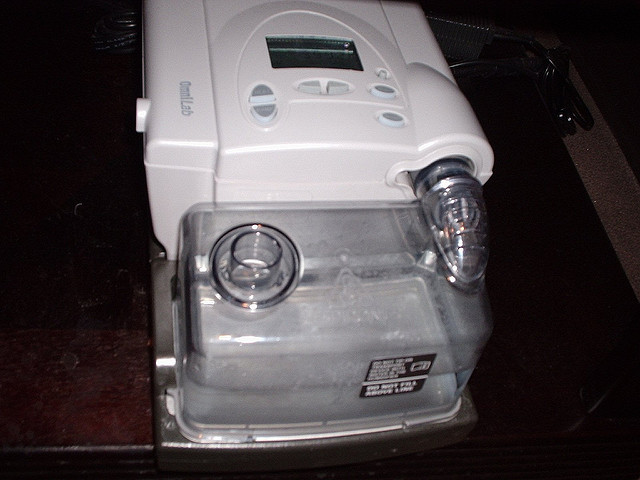
Firstly, when handling the humidifier water chamber, caution must be taken not to spill any water on or around the CPAP machine to avoid damage to the interior circuits.
The chamber must always be removed and then filled away from the machine.
Distilled water is typically recommended for humidifier water chambers and should never be reused (change water daily). The chamber should also be soaked daily in warm water and soap for 10 minutes, rinsed, and air dried.
CPAP filters
Replacing filters regularly helps CPAP machines last longer.
There are two types of filters for CPAP machines. Mostly all CPAP machines have a white fine filter which should be replaced as needed when it appears discolored or dirty. These are typically replaced every 1-2 months.
Some CPAP machines also have a second filter– a non-disposable, foam, gray or black filter. This filter should be hand-washed weekly with warm water and soap, rinsed, and air dried. They generally last for up to 1 year.
CPAP machine
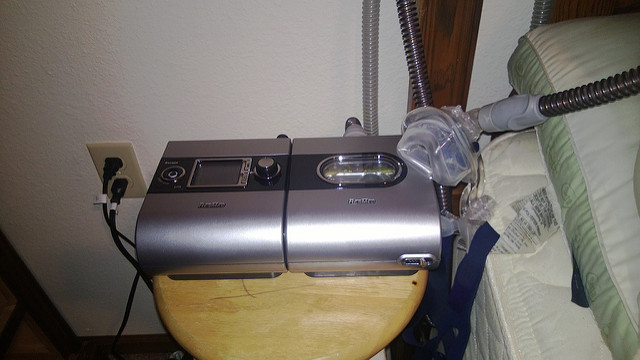
The CPAP machine itself typically only needs to be wiped clean on the outside weekly or whenever necessary with a wipe or a cloth with warm water and soap.
The machine should be dried after being wiped clean and should never be submerged in water.
Replacing equipment
For replacement schedules, patients should check both the manufacturer’s recommendations and also their insurance allowance. Generally recommendations are as follows:
- Mask cushions: replace 1-2 times per month.
- Masks: replace every 3-6 months.
- Machines: should be checked yearly to make sure they are working properly. Expiration dates should also be checked.
- Filters: replace monthly.
- Humidifier water chambers: replace every 6 months or as needed.
- Headgear and chin straps: replace every 6 months.
When to clean CPAP equipment
As mentioned, it is important to maintain a regular cleaning schedule, even while traveling.
Depending on the equipment, cleaning should be performed daily and weekly. See the table below for a summary of when CPAP equipment should be cleaned.
| Daily | Mask cushion Humidifier water chamber |
| Weekly
CPAP Machine Cleaning |
Mask frame Mask headgear and chin straps Tubing Filter Machine |
Products for cleaning CPAP equipment
There are various types of recommended products and tools that fight bacterial and fungal growth on CPAP equipment without causing damage and make daily cleaning much easier.
See the following table to learn more about these products.
| Sanitizing machines (CPAP Machine Cleaning) |
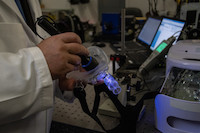
Sanitizing machines can be used, but there is a lack of data on their safety and efficacy.
Patients can place their CPAP accessories inside an apparatus to clean them or connect their CPAP tubing to the cleaning device for disinfecting. |
Mask cleaner

$14.99 In Stock Paid link · price checked October 10, 2026 09:15 |
As an alternative to soap water, specialty cleaners designed for use on CPAP equipment can be used to help fight bacterial and fungal growth. |
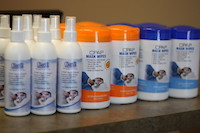
Mask wipes

$29.99 In Stock Paid link · price checked October 10, 2026 09:15 |
For a quick solution to daily morning cleaning, specially designed wipes for use on CPAP masks can be helpful.Wipes help remove any leftover dirt or oil and help keep masks clean in-between deeper washes (ie, soaks or washes in a sanitizer). |
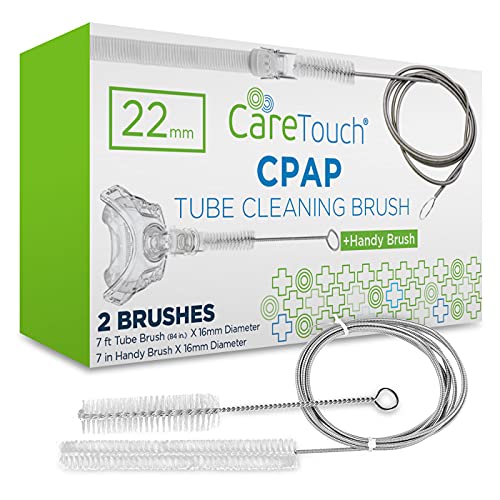
Tube-cleaning brushes
Paid link |
Brushes designed specifically for cleaning CPAP tubing are helpful for cleaning the inside of tubing. |
References
- American Sleep Association. How to clean your CPAP. https://www.sleepassociation.org/sleep-treatments/cpap-machines-masks/how-to-clean-your-cpap/. Accessed January 2022.
- American Sleep Association. Care and replacement of CPAP equipment. https://www.sleepapnea.org/treat/cpap-therapy/care-and-replacement-of-cpap-equipment/. Accessed January 2022.
- Philips Respironics. Philips sleep apnea therapy equipment cleaning instructions. https://www.sleepapnea.com/living/equipment-care/. Accessed January 2022.
- National Sleep Foundation. Simple steps to keep your CPAP machine clean. https://www.sleep.org/articles/simple-steps-keep-cpap-machine-clean/. Accessed January 2022.
- Capital Health. CPAP equipment maintenance. https://www.capitalhealth.org/medical-services/sleep-medicine/patient-education/cpap-equipment-maintenance. Accessed January 2022.
Images courtesy of Flickr.