A 98% Reading Isn’t Always Good News
A reading of 98% feels reassuring right up until you learn the device was clipped to a finger coated in Revlon ‘Black Cherry’ nail polish, which alone can suppress SpO2 readings by 2–5 percentage points. I’ve had more than one person come into the pharmacy waving an oximeter printout at me, relieved, when the number on the screen was quietly lying to them. Nobody puts that in the product listing.
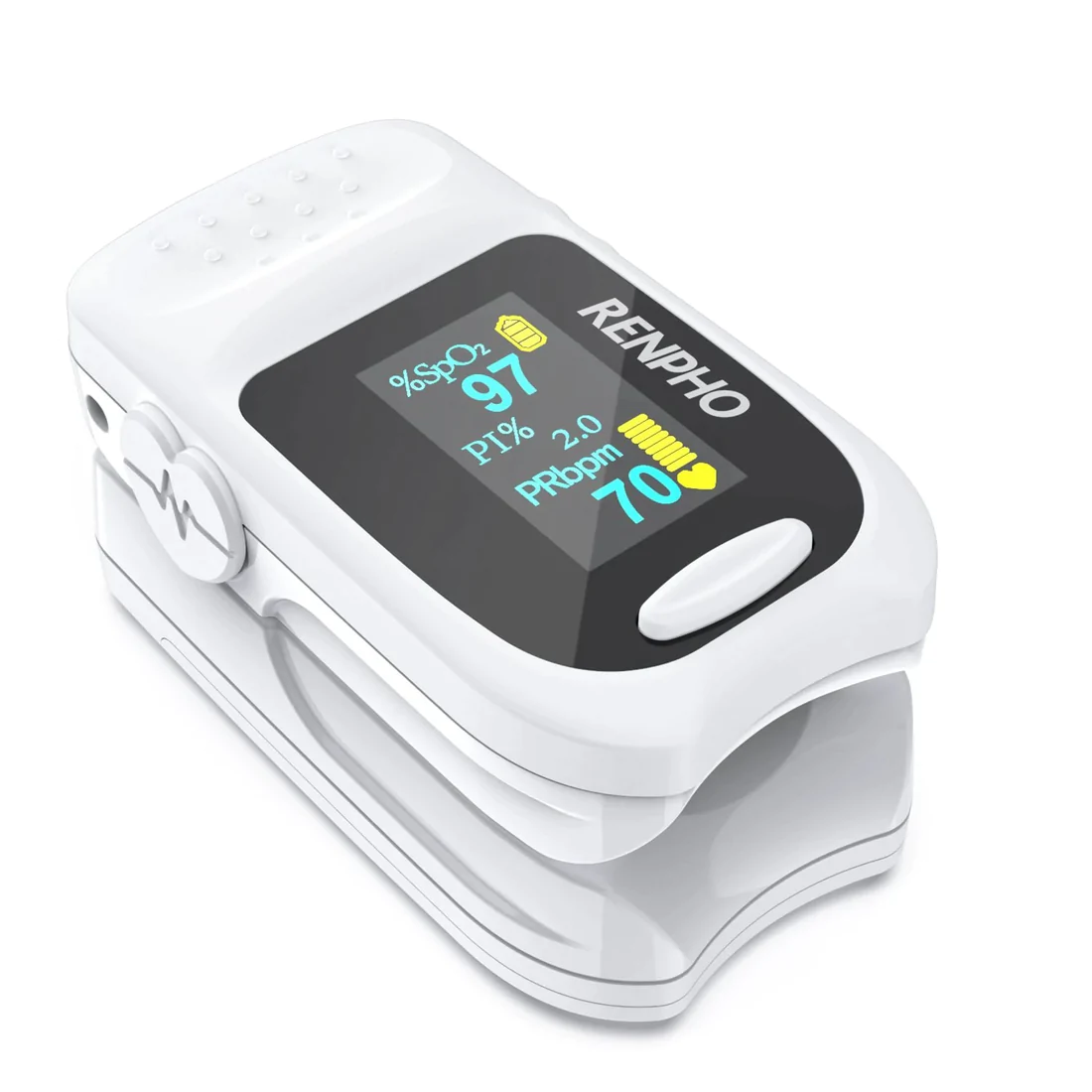
Renpho’s RH-OX01 is a competent little device. I want to be clear about that. But “competent” has a context, and most of what’s written about it online strips that context out entirely. So let’s put it back in.
What the Renpho RH-OX01 Actually Costs You — and What That Price Buys
On Amazon right now, this thing runs about $20–25. For comparison: the Zacurate 500BL comes in around $13 at the low end, the Nonin Onyx 9560 runs $89, and the Masimo MightySat sits at $199. Those aren’t arbitrary numbers. They map to real differences in engineering, not just branding.
FDA 510(k) clearance matters here. It means the manufacturer submitted data showing the device is substantially equivalent to a legally marketed predicate device. Not the same as “approved,” and definitely not the same as “hospital accurate.” Still, 510(k) clearance puts it above CE-mark-only devices that have never been reviewed by a U.S. regulatory body at all. Worth something.
What it doesn’t mean: that the reading you get is exact. FDA performance standards for these devices allow ±2% SpO2 accuracy in the 70–100% range. So if the screen shows 94%, the real value could legally be anywhere from 92% to 96%. A reading of 92% means something different from 96%, clinically speaking. One of those numbers might send a physician toward supplemental oxygen and the other might not. Most reviews breeze past this as a fine-print footnote. It isn’t.
Renpho is not competing with Masimo and shouldn’t try to. My frustration isn’t with the device itself. It’s with marketing copy that implies all 510(k)-cleared oximeters perform the same. They don’t. (I learned this the expensive way after buying three “equivalent” devices that disagreed with each other by four points on the same finger.)
How Photoplethysmography Works — and the Four Variables That Break It
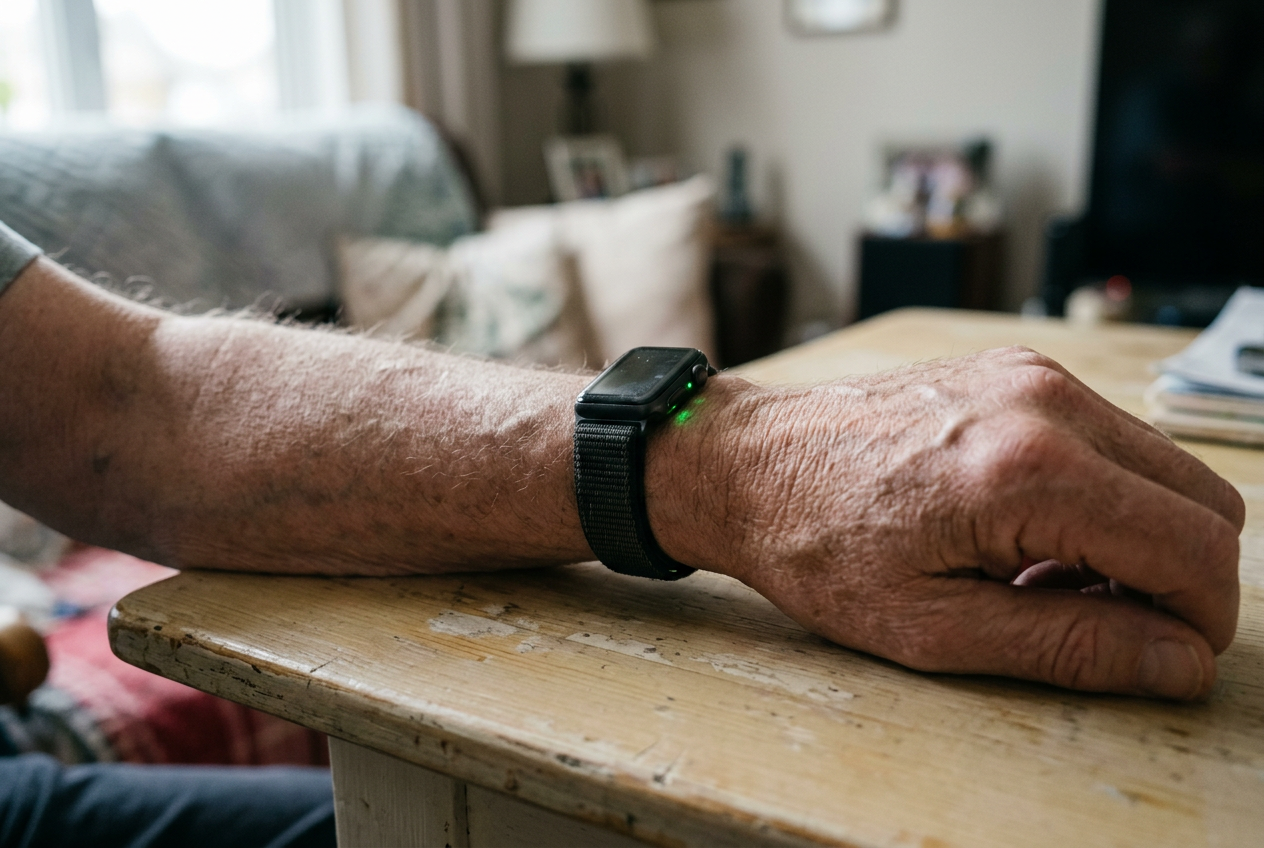
Clipped onto your finger, this device shines two beams of light through your tissue: red light at 660nm and infrared at 940nm. Oxygenated hemoglobin absorbs those wavelengths differently than deoxygenated hemoglobin, and the sensor on the other side of your finger calculates the ratio. Elegant when it works. Fragile when it doesn’t.
Four things reliably corrupt the signal. First: motion. Even small movements create noise that the algorithm can misread as a pulse. Second: poor perfusion. Cold fingers, low blood pressure, anything that reduces blood flow to the periphery. Finger temperature below 35°C degrades signal quality noticeably, and on a winter morning after you’ve been outside, your hands may be well below that. Third: ambient light. Strong direct sunlight or certain fluorescent lighting can bleed into the sensor and skew the reading. Fourth, and this one deserves more than a bullet point: skin pigmentation.
A 2020 study published in the New England Journal of Medicine found that Black patients had a three times higher rate of occult hypoxemia that pulse oximeters missed entirely. Normal saturation on screen. Patient actually hypoxic. This isn’t a Renpho problem specifically — it’s a technology-wide problem baked into how the 660nm/940nm wavelength pair was calibrated, historically on populations that skewed white. Every consumer oximeter maker has under-disclosed this. Buyers deserve to know it exists before they trust the number.
One more thing. A strong, visible pleth waveform on the display does not confirm an accurate SpO2 reading. I see people assume this all the time. Waveform confirms the device is detecting a pulse. That’s separate from whether the SpO2 calculation is valid. Renpho auto-offs after 8 seconds of no valid signal, so if it stays on, people assume everything is fine. Sometimes it isn’t.
Three Scenarios Where the Renpho Earns Its Place in Your Medicine Cabinet
I actually do keep one of these in my bag when I travel. Not for everything, but for three specific situations, a $22 oximeter is genuinely useful.
First: trending SpO2 during a respiratory illness in someone with a known normal baseline, no circulation issues, light nails. Emphasis on trending. You’re not looking for a single reading; you’re watching whether numbers are drifting down over hours. Normal resting SpO2 for a healthy adult at sea level falls between 95–100%. During the height of COVID, the commonly cited ER threshold from CDC guidance was SpO2 below 92% in a symptomatic patient. A consumer oximeter can track that movement reasonably well in the right person.
Second: altitude. Above 8,000 feet, the partial pressure of oxygen drops enough that even healthy people experience real desaturation. A drop below 90% at that altitude is a clear action signal — descend or use supplemental oxygen. You don’t need clinical precision for that call. For altitude trekking specifically, a $22 oximeter might be one of the highest-value safety items you can carry.
Third: CPAP follow-up spot checks between clinic visits. If you’re managing sleep apnea and you wake up feeling unrested, a quick spot check first thing in the morning gives your doctor something to work with. Won’t replace a sleep study. But as a data point, it’s not nothing.
Two Scenarios Where This Device Creates False Confidence
Almost nobody writes about this part. Honestly, it’s why I felt like I needed to write this at all.
Carbon monoxide poisoning. Standard pulse oximeters use only two wavelengths of light. Carboxyhemoglobin — the form of hemoglobin that binds to carbon monoxide — absorbs light at 660nm almost identically to oxyhemoglobin. The device cannot tell them apart. So a person being actively poisoned by carbon monoxide will read 98–100% on any standard two-wavelength oximeter, including this one, while their cells are being starved of oxygen. The reading isn’t just wrong — it’s reassuring. It gives you no reason to act. Only co-oximetry, an eight-wavelength device used in hospital labs, can actually detect carboxyhemoglobin. This is a silent failure, and leaving it off virtually every consumer oximeter product listing is a genuine public safety problem. Not an overstatement. We’re talking about a device marketed in homes where gas appliances and attached garages exist, with no mention that it will miss one of the most dangerous oxygen delivery emergencies a person can have.
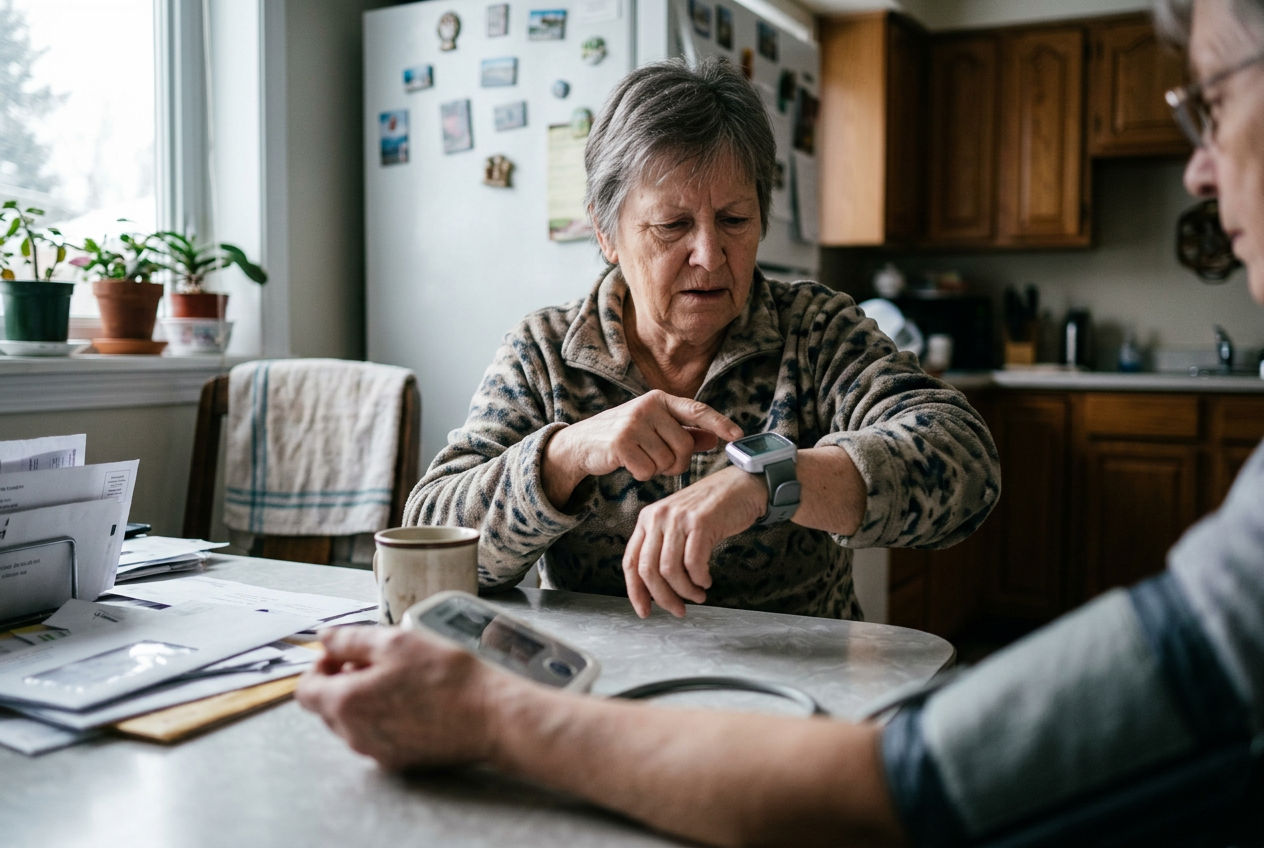
The second scenario is quieter but more common. Dark nail polish — black, blue, green — can artificially lower SpO2 readings by 2–5%. Acrylic nails interfere similarly. Raynaud’s phenomenon, a vascular condition where the fingers go cold and pale in response to cold or stress, can reduce peripheral perfusion enough to trigger artifactual readings below 90% in someone whose actual saturation is perfectly normal. These are a different kind of failure from the carbon monoxide problem: a falsely low reading is alarming, and alarm at least prompts you to act. A falsely normal reading — the CO scenario — suppresses alarm entirely. That asymmetry matters. One failure mode causes unnecessary anxiety. The other can kill you before you think to look.
A normal SpO2 reading does not rule out serious oxygen delivery problems. It rules out hemoglobin desaturation from one specific mechanism. Every product description should say that. None of them do.
The One Setting Most Users Never Change (and Why It Matters)
Display rotation gets all the attention. Fine feature, useful if you’re holding your hand at an angle. Not what I want to talk about.
Perfusion index. If a device shows PI, that number tells you how strong the peripheral pulse signal is at the measurement site. A PI below 0.4% means poor peripheral perfusion, and a SpO2 reading taken under those conditions is clinically unreliable. Full stop. Some versions of the RH-OX01 display PI; others don’t. If yours doesn’t show it, watch the pleth waveform amplitude instead. A small, weak, irregular waveform is a proxy signal that perfusion isn’t great and the SpO2 number should be treated skeptically. A tall, regular waveform gives you more confidence.
Here’s what I wish Renpho would fix in the next revision: without a perfusion index display, the user has no objective way to know whether their reading came from a strong signal or a garbage one. Real design limitation. Not a dealbreaker for the right user, but it’s real.
Finger placement: use your left middle finger. Not the index finger. Middle finger has a larger tissue bed and typically gives a more stable signal on clip-style devices. Most people default to the index finger out of habit. Your hand should sit at roughly heart level. Below your heart, venous pooling can affect the reading. Small thing, but it adds up.
Renpho RH-OX01 Specs Against the Numbers That Actually Matter Clinically
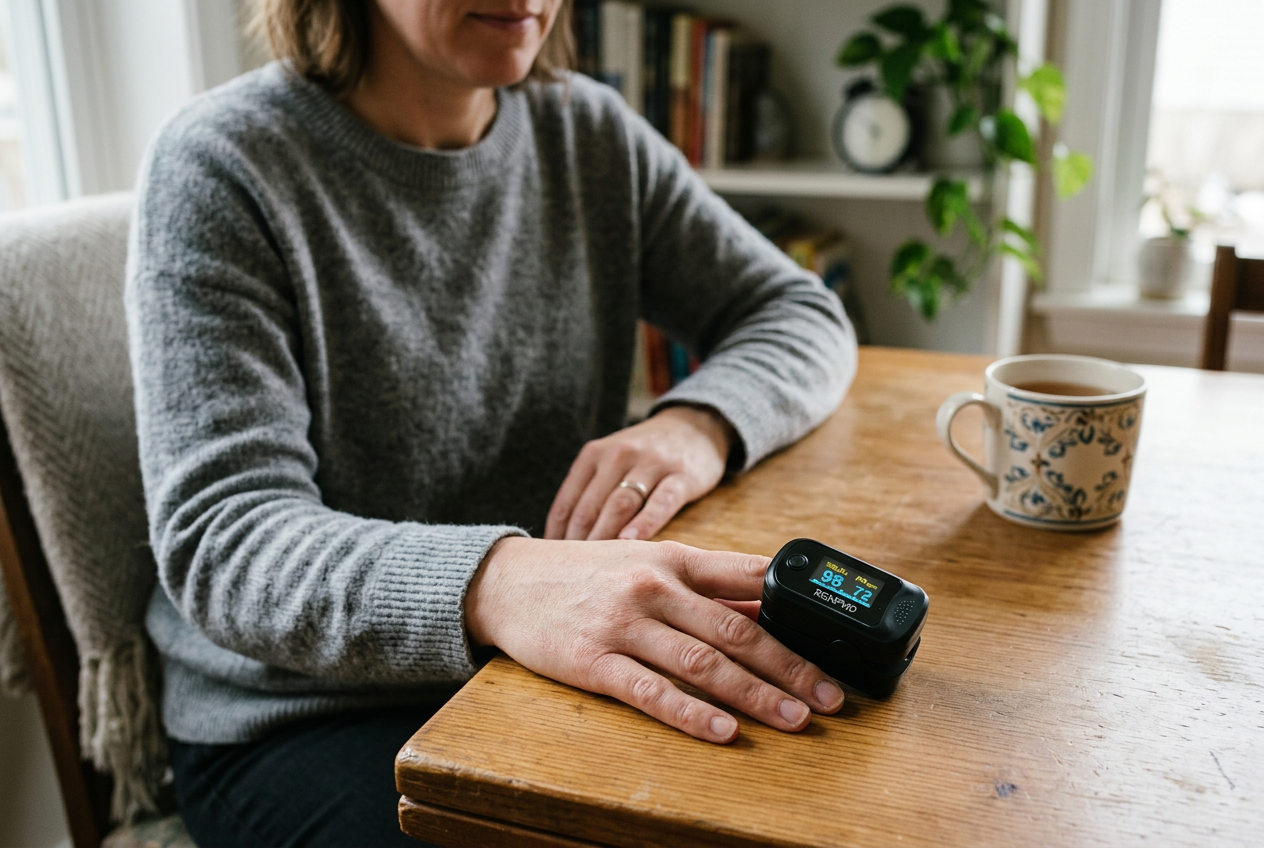
SpO2 measurement range: 70–100%. Almost no review mentions the lower bound on that range. Below 70%, the device is not validated. Pulse rate range is 30–250 BPM, which is fine for most adult use. Accuracy is ±2% for SpO2 and ±2 BPM for pulse rate. Two AAA batteries are included; runtime is approximately 30 hours of continuous use. Operating temperature is 5–40°C, and below 5°C ambient, readings are unreliable. A very cold car counts. A mountain summit in shoulder season counts.
Zacurate Pro Series 500DL runs about $19, is also 510(k) cleared, and hits comparable specs. Honestly, if you can find it cheaper on a given day, the functional difference between the two is minor for a healthy adult doing spot checks. I’m not saying Renpho is superior to Zacurate. Both are appropriate for the same narrow use case.
Neither of them has the perfusion index, respiration rate, and pleth variability index that Masimo’s MightySat adds at $199. Those metrics matter in clinical contexts. For a healthy person doing occasional spot checks at home, they add complexity without giving you anything more to act on.
When to Stop Trusting the Number and Call Someone Instead
Three readings, one minute apart. A single reading is noise. Three readings give you a trend, and a trend is what you actually need to make a decision.
Here are my thresholds when someone calls from home. SpO2 persistently below 92% at rest in a symptomatic person: call your physician same day, don’t wait until morning. Below 88%: go to the ER. Any reading at any number if you’re working hard to breathe: do not sit at home watching the screen. Go.
Happy hypoxia complicated all of this during COVID-19. JAMA documented patients with SpO2 readings of 80% who reported minimal shortness of breath — moving around, talking, seemingly okay, while their oxygen levels were critically low. Reading was right. Absence of distress was misleading. This is why I push back on the framing that an oximeter gives you “peace of mind.” Sometimes it gives you a number that should terrify you while you feel fine, and the value of the device is in catching that gap before it closes on you.
An oximeter’s real job isn’t confirming you’re okay. It’s lowering the threshold at which you pick up the phone. That reframe is absent from almost every product description I’ve ever read, and it’s the most important thing to understand about owning one of these.
The Honest Verdict: Who Should Buy This and Who Should Spend More
Buy the Renpho RH-OX01 if you’re a healthy adult using it for altitude monitoring, trending saturation during an acute illness, or occasional spot checks. Light nails or no nails. No peripheral vascular disease. No chronic cardiopulmonary conditions. For that person, $22 is genuinely the right call.
Spend $89 on the Nonin Onyx 9560 if you’re managing COPD, heart failure, or any chronic condition where SpO2 is a regular clinical input. Nonin is used in home hospice protocols and telehealth monitoring because it earns that trust. An extra $67 is not a luxury in that context.
Spend $199 on the Masimo MightySat if you’re a medical professional, a pilot, or leading high-altitude expeditions where perfusion index and pleth variability index are actually part of your decision-making. Bluetooth app connectivity on Renpho, by the way — you don’t need it for the core function. SpO2 and pulse rate display right on the device. App is optional, and for most users, it adds nothing except another thing to charge.
Recommending Renpho to someone managing a chronic lung condition to save $70 is irresponsible. I’ve seen it done. Device isn’t wrong for the price. It’s wrong for the person. And that’s the whole conversation, really.