
Your watch says 96. The fingertip clip in the drawer says 93. Both show a calm, confident number, and they can’t both be right. But a gap like that is common, and it has reasons you can learn to read.
I’m not a pharmacist, nurse or doctor, and this isn’t medical advice. A watch or a clip is a gadget, not a diagnosis. If a reading worries you, or you feel short of breath, call someone: your doctor first, emergency services if it’s severe.
How Your Watch Gets a Number From Your Wrist

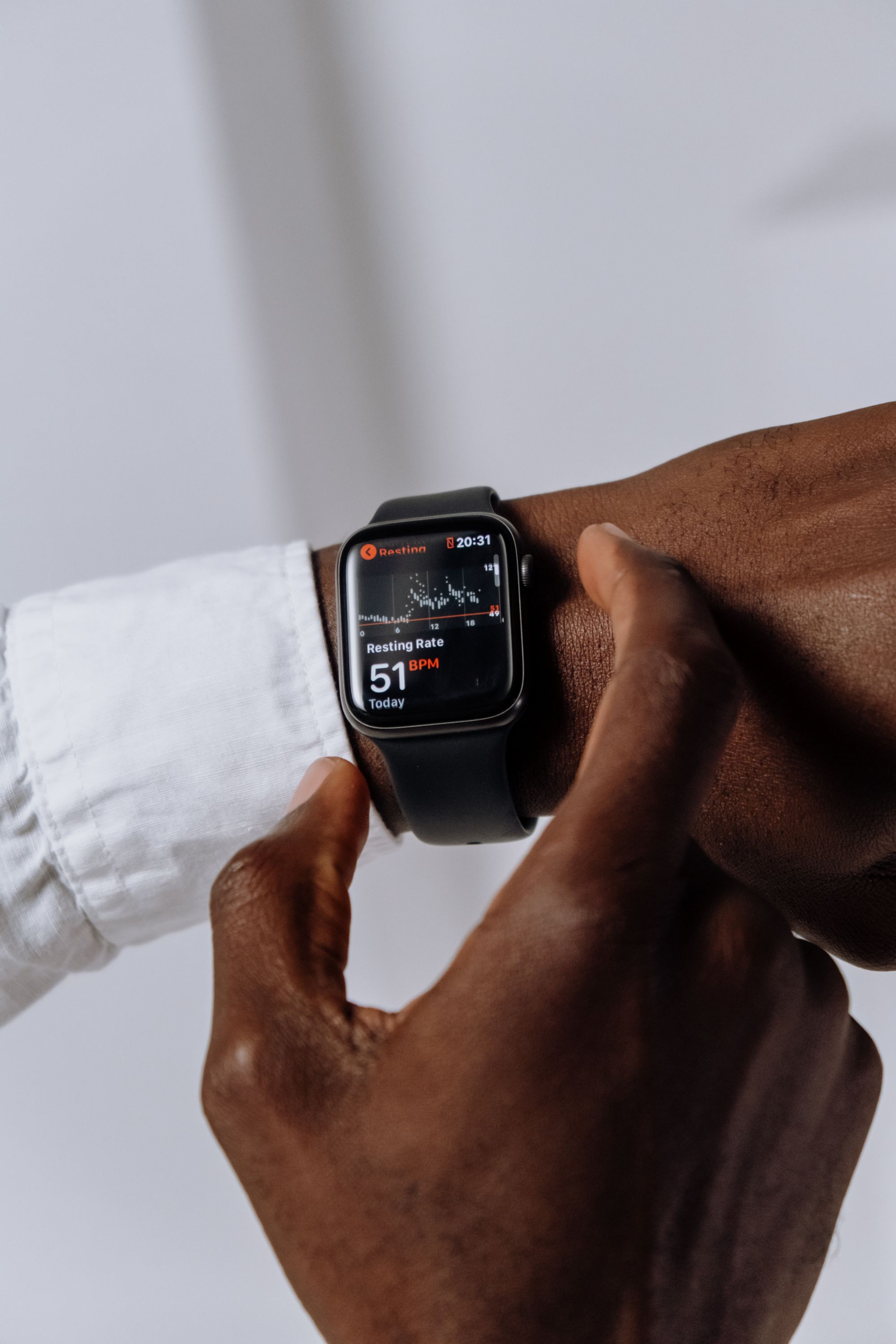
A fingertip clip has one job and a good spot to do it. A watch has a harder one, and it turns out the wrist is a tricky spot. Apple’s Blood Oxygen app shines a bright red light against your wrist and works out the number from what comes back, and it asks you to hold still for 15 seconds. The method has a name, reflectance, and in one lab comparison the authors point out that it gets a weaker signal than the clip method hospitals use, and that the wrist has much less blood flowing through it than a finger does.
So that’s most of the story behind two different numbers. Different spot, different light path, less blood to read.
The app also measures on its own in the background, usually when you aren’t moving, and the results land in the Health app on your iPhone. So a number you find there is often from a still moment, taken while you weren’t looking at it.
The red light is easy to see in a dark bedroom, and if it bothers you the background readings can be switched off in the watch’s settings. Blood oxygen readings only happen during sleep when the sleep-tracking setting is on.
Neither number is a blood test. A pulse oximeter estimates the oxygen in your blood from light rather than counting it. Oximeters sold as general wellness products aren’t evaluated for deciding whether you need medical care, and the readings from a watch’s Blood Oxygen app are meant for general fitness and wellness, not for medical use.
How Close the Wrist Gets in the Studies
In a study of 49 adults (some with chronic lung disease), the Apple Watch Series 7 was off by 2.2 points on average against a clinical fingertip oximeter. The Garmin Venu 2s missed by 5.8 points. The watches also failed to give a number at different rates: the Apple Watch managed a reading on 88.9% of tries, and the Withings ScanWatch on only 69.5%, so about 3 tries in 10 gave you nothing.
Another team had 18 healthy volunteers breathe air with less oxygen in it. The Apple Watch 8, Samsung Galaxy Watch 5 and Withings ScanWatch all stayed inside a typical error of 4 points from a hospital reference, and the Apple Watch came closest.
The third looked at 36 people with COPD after rest, a 30-second sit-to-stand and a six-minute walk. The Apple Watch Series 7 was typically 3.5 points off at rest, 4.1 after the sit-to-stand and 3.9 after the walk. The Garmin Vivosmart 4 was 3.3 at rest, then 6.1 and 5.4 once people had been moving.
A fair error band for a good watch is a few points, and wider for others. If the typical miss is 4 points, a 95 on your wrist could be a 91 on the clip, so give any single number that much room.
Why a Wrist Reading Goes Missing or Wrong

The same few things spoil most wrist readings, and Apple lists them. Cold hands are the big one. In the cold, the blood flow in your wrist can drop too low for the sensor to work, so you get nothing, or a poor number. Motion does it too, and so does an arm hanging by your side or a hand in a fist.
Here’s what Apple asks you to do:
- Wear the watch snug but comfortable, with the back of it touching your skin.
- Rest your arm on a table or your lap, wrist flat, palm down, and hold still.
- If wrist bones get in the way, move the watch 1 to 2 inches up your arm.
- Expect no result if your heart rate is above 150 at rest.
- Know that some tattoos block the light, depending on the ink, pattern and saturation.
Even with all of that done right, the watch may not get a reliable reading every time, and for a small percentage of people it can’t get one at all. A blank screen is a normal result, not a failure on your part.
But none of this means the watch is broken. The number is only as good as the few minutes before it. A watch read after a brisk walk, with cold hands and a loose band, is a guess dressed up as a measurement.
Skin Tone, Nail Polish and Other Things the Manual Mentions

Several things can throw off any pulse oximeter: poor circulation, skin pigmentation, skin thickness, skin temperature, tobacco use and nail polish. The evidence so far points to some accuracy differences between lighter and darker skin, and draft guidance published in January 2025 aims to improve how medical oximeters perform across skin tones.
If you have darker skin, I’d lean harder on how you feel than on any single number. Our guide to the best pulse oximeter for dark skin goes through what to check before you buy a clip.
And nail polish is on that list too. Our post on nail polish and pulse oximeters asks whether the color changes your reading, and the FDA’s plain advice is to take it off the finger you’re using.
When I’d Trust the Fingertip Clip

I’d treat the watch as a trend line and the clip as the number to write down. And a watch is genuinely handy for noticing that your evenings have looked different for a week. A clip is what I’d reach for when you need one number you can tell your doctor about.
On the display, most clips show two or three numbers. The big one is oxygen saturation, written SpO2 and shown as a percentage. Next to it is the pulse rate, and sometimes a third number for how strong the signal is. A weak signal number is a good reason to warm up and try again.
The steps for a good home reading are short:
- Warm your hand first, and keep it relaxed and below the level of your heart.
- Take nail polish off the finger you’ll use.
- Sit still and don’t move that hand.
- Wait a few seconds until the display stops changing and shows one steady number.
- Write down the reading with the date and time.
Plenty of people bought over-the-counter oximeters during the pandemic, and the ones sold as general wellness products are never reviewed by the FDA before they reach a shelf. So read the manual and the fine print on the box. Some clips are cleared for medical use and a small number of those are sold over the counter; many more are sold as general wellness products. Our post on which pulse oximeters are FDA-approved shows how to tell, and how accurate finger pulse oximeters are shows what error band to expect from them.
What the Number Means and When to Call Your Doctor
For most healthy people the normal range is 95% to 100%. It can sit lower for people with lung or heart problems, and it runs a bit lower at high altitude. Some people live a normal life below 95%, and slightly lower values are expected during sleep. So a single 94 on a cold evening isn’t an emergency. A number that keeps landing below the range your own doctor has given you is a reason to call. Our guide to the normal blood oxygen level by age lays the ranges out.
Put the reading next to how you feel. Signs of low oxygen include a blue tint in the face, lips or nails, shortness of breath or a cough that gets worse, restlessness, chest pain or tightness, and a fast, racing pulse. Some people with low oxygen don’t show any of these, which is why a good-looking number doesn’t cancel out a bad feeling.
Watch Against Clip: A Few Days of Notes
If you own both, you can learn how they behave together. Sit down, warm your hands (really), and take the watch reading, then the clip reading, in the same minute. Write both down. Do it at the same time of day for a week.
If the two sit within a point or two of each other on most days, that’s your watch’s usual gap. If they swing apart by 5 or more points most days, I’d stop leaning on the watch for anything but a rough trend. Bring the notebook to your next appointment. A week of dated numbers tells your doctor much more than a single screenshot.