As an Amazon Associate I earn from qualifying purchases. This post contains affiliate links. If you buy through them we may earn a commission at no extra cost to you.
Product prices and availability are accurate as of the date and time indicated and are subject to change. Any price and availability information displayed on Amazon at the time of purchase will apply to the purchase of this product. Certain content that appears on this site comes from Amazon. This content is provided "as is" and is subject to change or removal at any time.

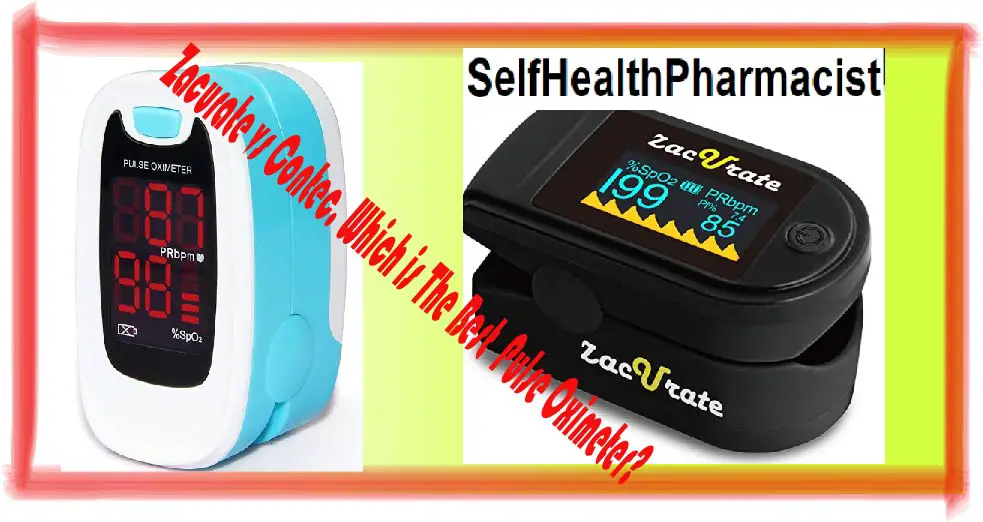
- [Accurate & Fast Results]- Measures accurately and quickly spo2(blood oxygen saturation of arterial hemoglobin levels), pulse rate, bar graph and pulse strength results,display it conveniently on digital LED display.
- [Portable & One Click Use] -The light-weight oxygen monitor is about 50g(with the batteries), you only need to put your finger in the fingertip pulse oximeter testing chamber, the result will be shown.
- [Comfortable & Long Battery Life] -The contec oxygen meter's fingertip clip is soft and easy for a wide range of finger sizes, 20-30 hours battery life, automatic power off after 5 seconds.It comes with a little case that makes it easy to carry around in your pocket.
$11.99 In Stock
Paid link · price checked October 19, 2026 10:39
A Respiratory Therapist Told Me Something That Stuck
She returns about one Contec CMS50D a month. Not because the device is broken. Because the patient assumed FDA-cleared means the same thing as FDA-approved, filed paperwork with their insurer, got denied, and blamed the oximeter. That confusion is costing real people real reimbursements. And almost every review out there is making it worse by treating these two devices as interchangeable color options on the same basic gadget.
They’re close. But not interchangeable. Here’s what actually separates them.

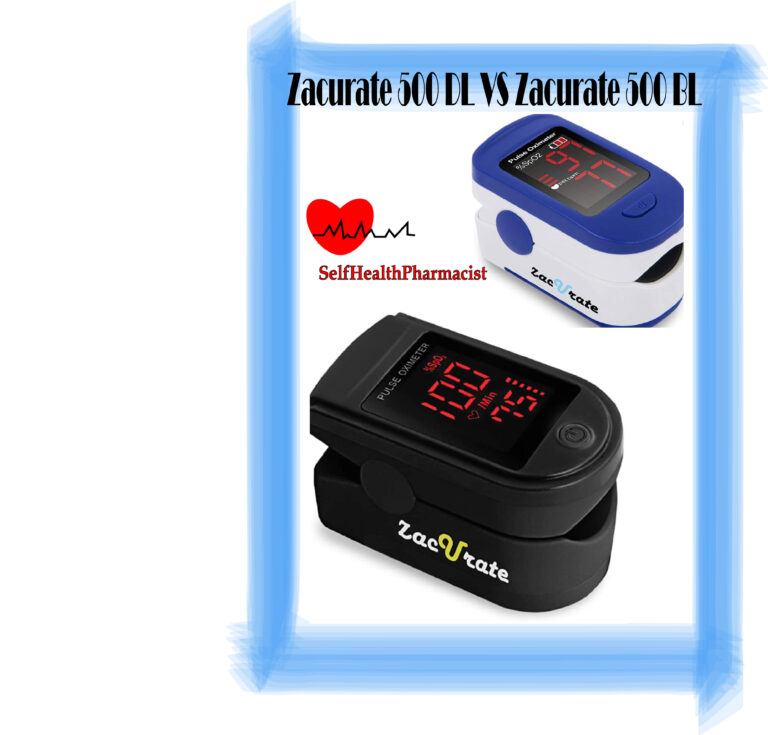
- ACCURATE AND RELIABLE – Accurately determines your SpO2 (blood oxygen saturation levels), pulse rate and pulse strength in 10 seconds and displays it conveniently on a large digital LED display.
- FULL SPO2 VALUE – The ONLY LED pulse oximeter that can read and display SpO2 up to 100%.
- SPORTS/HEALTH ENTHUSIASTS – For sports enthusiasts like mountain climbers, skiers, bikers, and anyone needing to monitor their SpO2 and pulse rate. The pulse oximeter LED display faces the user for an easy read.
$19.99 In Stock
Paid link · price checked October 19, 2026 10:39
The $4 Price Gap That Explains Almost Everything
Right now, May 2025, the Zacurate Pro Series 500DL sits at roughly $19.99 on Amazon. The Contec CMS50D floats between $15.99 and $23.99 depending on which seller you’re looking at. Both ship with two AAA batteries and a lanyard. Both carry a one-year warranty, though Contec’s is technically “limited” and funnels you through US-based email support only.
Here’s the mistake I see constantly: people spot the Contec at $15.99 and assume they’re getting the same thing cheaper. Sometimes they are. But the Contec CMS50D has a counterfeiting problem on Amazon Marketplace that’s genuinely difficult to navigate. Fake units circulate and they look identical to genuine ones, same box, same font, same feel in your hand. Zacurate sells through a single storefront. Contec doesn’t control its third-party listings the same way.
So the price difference isn’t about components. The internals on these two devices trace back to the same Shenzhen supply chain, same Masimo-compatible photodiode array family. What you’re actually paying for with Zacurate is distribution channel reliability. That’s a legitimate thing to pay for. It’s just not what anyone tells you.
What FDA 510(k) Clearance Actually Means for These Two Devices
This is the section most reviews get wrong, and it matters more than anything else I’m going to tell you.
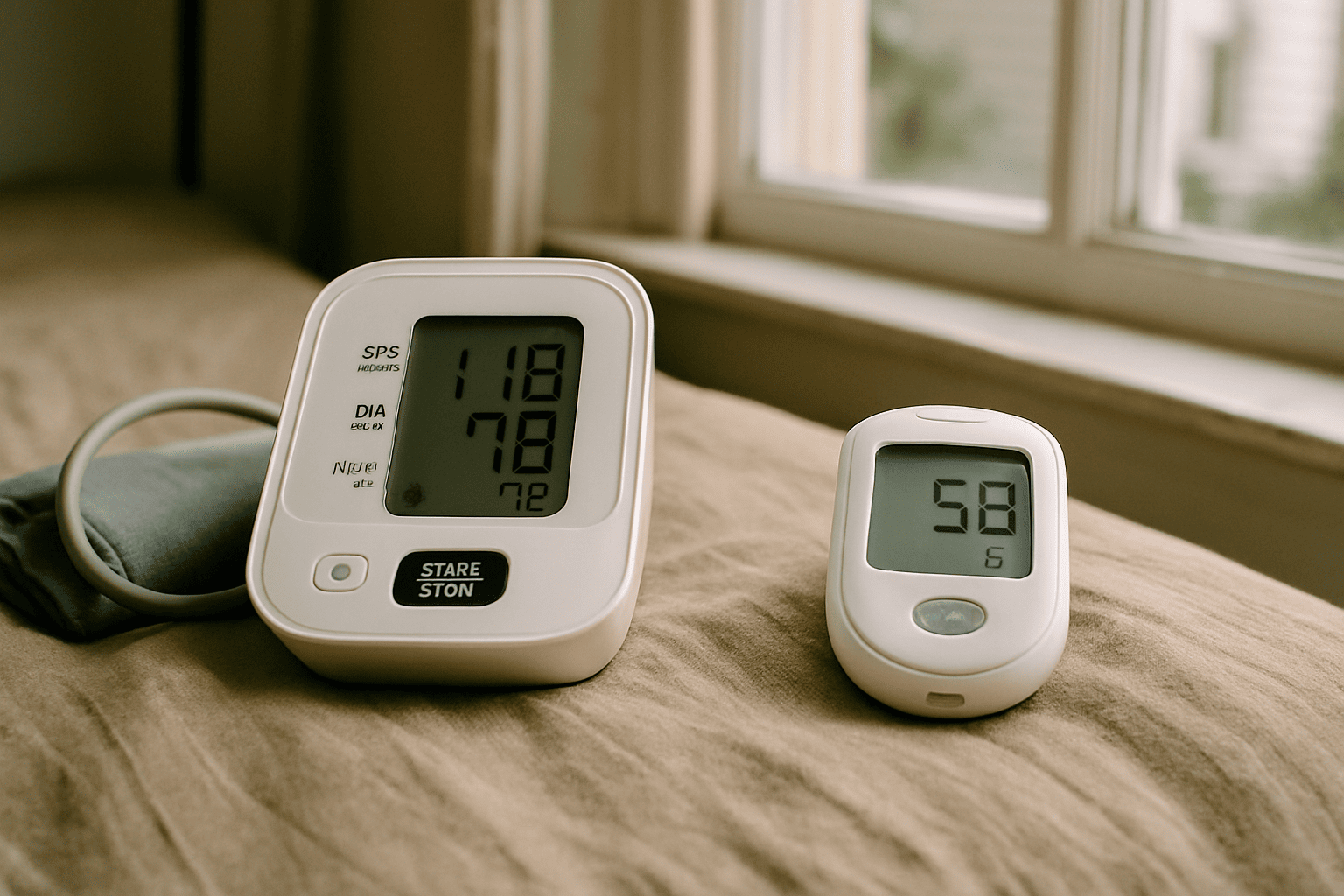
The Zacurate 500DL holds FDA 510(k) clearance, clearance number K183282. The Contec CMS50D does not hold 510(k) clearance for the US market. Those are facts. What they mean requires a little more care.
510(k) clearance is not the same as FDA approval. I want to be blunt about that because the conflation is everywhere. Approval means independent clinical trials, new drug application, a whole separate process. Clearance means the manufacturer demonstrated that their device is substantially equivalent to a predicate device already on the market. It’s a lower bar. It’s still a meaningful bar, but it is not the same thing, and calling it approval is legally wrong.
Why does clearance matter practically? Because Medicare and most major private insurers require 510(k)-cleared devices for home monitoring documentation that you’re submitting for reimbursement. If your doctor has you on supplemental oxygen and wants SpO2 records to justify continued coverage, the device generating those records generally needs to be 510(k) cleared. The Contec won’t cut it for that purpose. The Zacurate will.
But, and I’ll say this plainly since nobody else does: for 90% of people reading this, the Contec’s lack of clearance is completely irrelevant. If you’re spot-checking before a doctor’s appointment, monitoring yourself during a cold, or just curious about your oxygen level after climbing stairs, you don’t need K183282 on your device. You’re overpaying for a bureaucratic credential you’ll never use.
Accuracy Numbers Both Brands Bury in Their Spec Sheets
Both devices claim ±2% SpO2 accuracy across the 70–100% range. Pulse rate accuracy is ±1 bpm or ±1% between 30 and 250 bpm on both units. Operating temperature range is 5°C to 40°C on both. Identical specs, essentially.
Now let me tell you what that ±2% actually means in practice, because neither brand explains it and it genuinely matters. A reading of 94% could legally be anywhere from 92% to 96%. That range spans the clinical threshold that often triggers supplemental oxygen intervention. So a single reading of 94% is not a fact. It’s a range. Treating it as a definitive number and making health decisions off it is the kind of thing I see happen constantly, and it worries me.
My strong recommendation: take three consecutive readings and average them. That’s the minimum responsible approach for any health decision. I know it sounds fussy. It isn’t.
Below SpO2 of 80%, neither brand publishes validated accuracy data. At all. The spec sheet covers down to 70% but there’s no actual validation data backing that range on either device. If someone is reading in the low 80s or below, the number on the screen is increasingly unreliable and the right response is to call a doctor, not stare harder at the display.
There’s also the skin tone issue. A 2020 NEJM study found that pulse oximeters overestimate SpO2 by 3 to 4 percentage points in patients with darker skin pigmentation. Neither the Zacurate nor the Contec publishes any skin-tone accuracy data. That overestimation means a patient whose actual saturation is 91% might be reading as 95%. That’s not a trivial gap. It’s one that can delay intervention. I bring it up because I think people deserve to know it.
Display, Orientation Modes, and the One Hardware Difference That Actually Matters
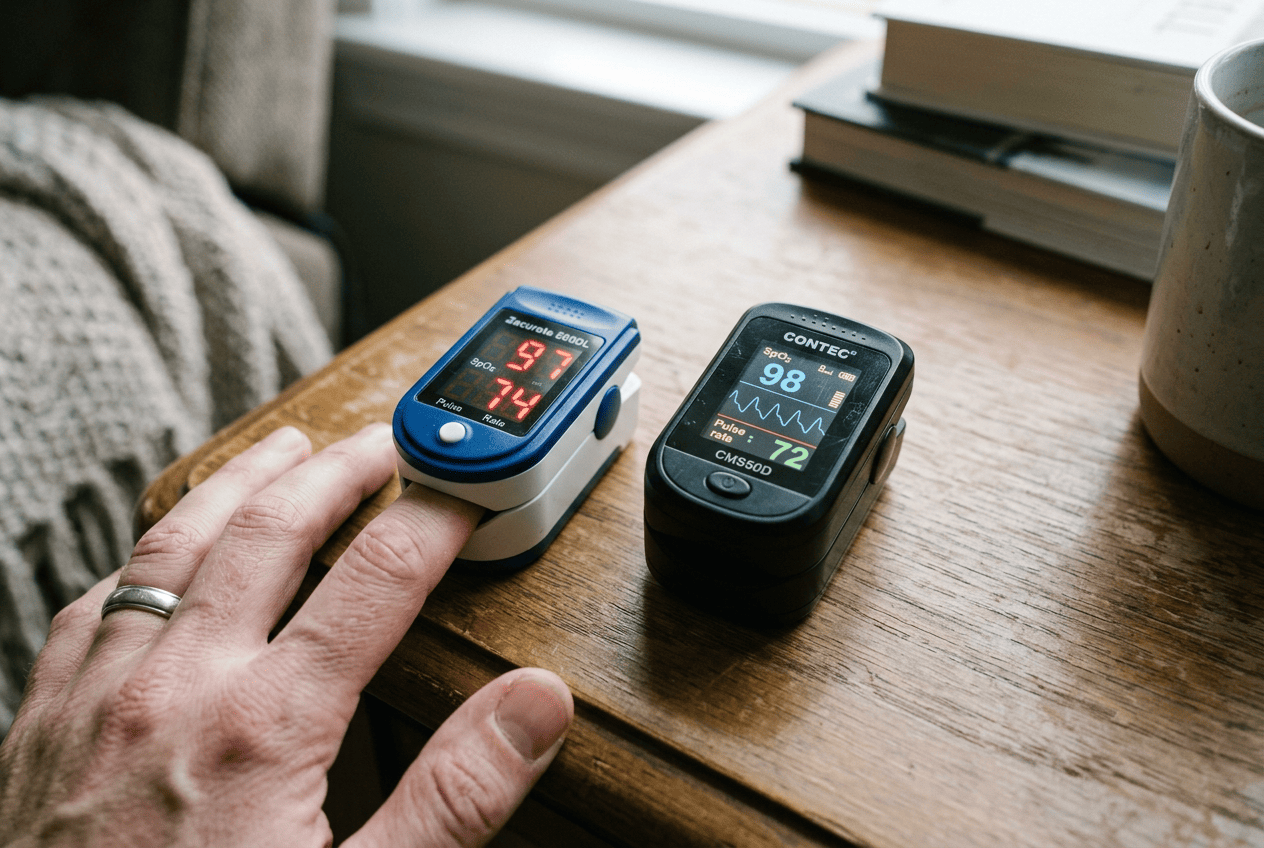
Both devices use 0.96-inch OLED panels. Not LCD. OLED. I see reviews calling the Contec “brighter” and I have to roll my eyes a little, because neither brand publishes a nit or lux measurement, and they’re the same panel size and technology. That comparison has no data behind it.
The Zacurate 500DL has six-direction display rotation. The Contec CMS50D has four. That sounds like a spec-sheet one-upmanship thing and I thought so too until I thought about who actually uses these devices. Left-handed users. People with limited wrist or shoulder mobility. Patients lying in bed at odd angles trying to read a screen. Six directions is genuinely more flexible for those situations. It’s the one ergonomic win Zacurate has and I think it’s underreported.
The Contec has something the Zacurate doesn’t: a wrist-strap mounting port. Small thing, but if you want to strap it to your wrist or a bedside rail, the hardware is there. Zacurate doesn’t have that port.
Where Both Devices Fail in Practice, and When That Failure Matters
This is the section I’d want someone to read before buying either device.
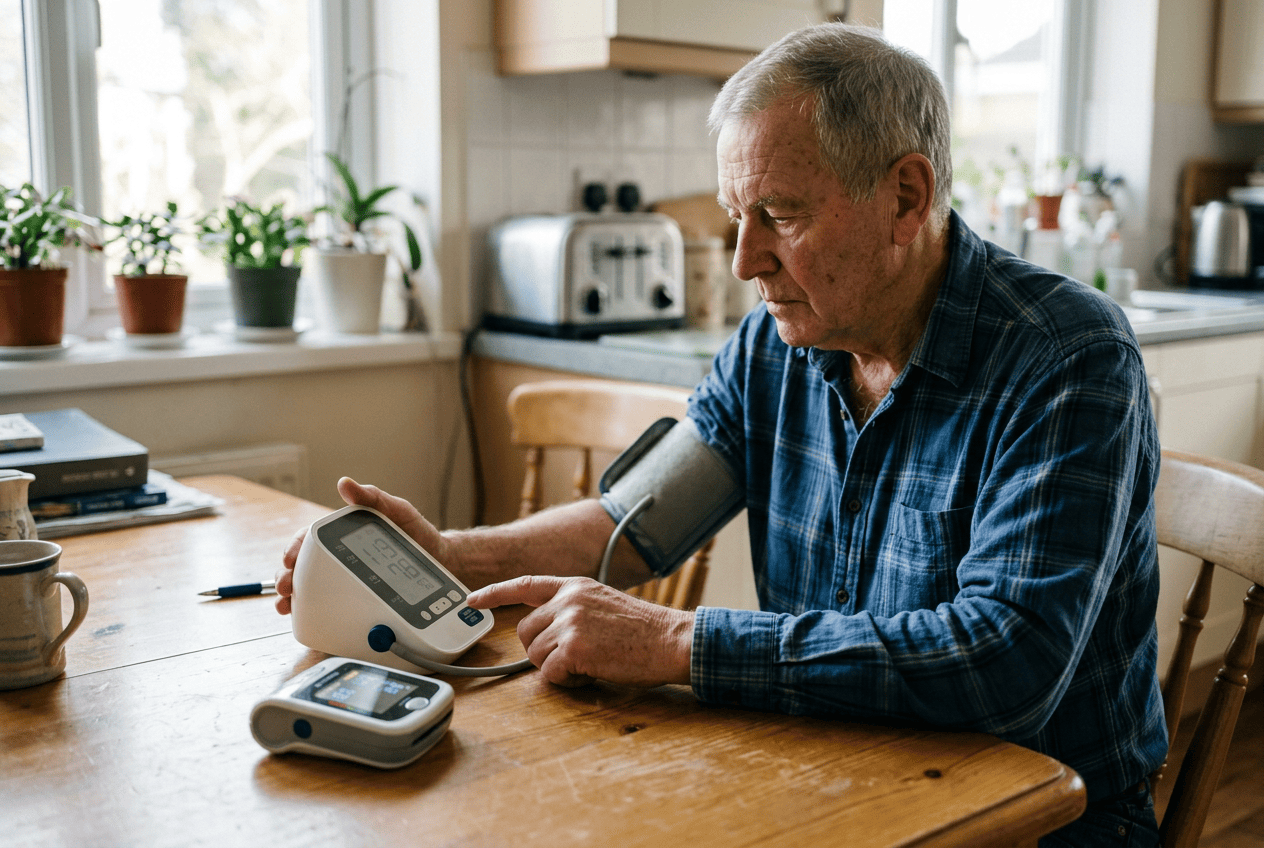
Both units show “ERR” when the perfusion index drops below 0.2%. Readings become unreliable at PI below 0.4%. A lot of buyers see that ERR and think the device is defective. It isn’t. It means your finger isn’t perfusing well enough for a valid reading, which is itself clinically useful to know. Cold hands, low blood pressure, poor circulation. The device is telling you something, just not in plain English.
Dark nail polish, specifically blue, black, and purple shades, can cause SpO2 underreading by up to 4% on both units. Neither brand puts this prominently in the packaging. I’ve started just telling people: use a bare fingernail, ideally your index or middle finger, warmed up if you’ve been outside.
Finger temperature below 15°C degrades accuracy on both devices. Neither publishes a low-perfusion warning threshold anywhere accessible. And both use basic averaging algorithms for motion artifact, not the adaptive signal processing you get in Masimo devices that start around $150.
If you have Raynaud’s disease, peripheral artery disease, or chronically cold hands, I want to say this directly: neither the Zacurate 500DL nor the Contec CMS50D is reliable enough for your health tracking. I’m not saying that to be discouraging. I’m saying it because I’d rather you know upfront than discover it when a reading doesn’t match how you feel.
Zacurate 500DL vs Contec CMS50D: The Side-by-Side Numbers
SpO2 range: 70–99% on both. Pulse rate: 30–250 bpm on both. Zacurate’s battery life is rated at approximately 30 hours continuous. Contec’s is about 20 hours continuous per manufacturer spec. Auto power-off: 8 seconds with no signal on the Zacurate, 5 seconds on the Contec. Weight with batteries: 50g for the Zacurate, 54g for the Contec. FDA 510(k): Yes, K183282, for Zacurate. No, for the Contec CMS50D.
The battery life gap is the most underrated number on that list. If you’re a caregiver checking a family member multiple times overnight, 30 hours versus 20 hours is the difference between changing batteries every few days versus doing it more often than you want to. It’s not glamorous. It matters.
Who Should Actually Buy the Contec Instead of Zacurate
Reviewing the base Contec against the base Zacurate misses something important. Contec has a lineup.
The Contec CMS50D-BT is a Bluetooth variant that pairs with free SpO2 Review software for PC logging. You download the software directly from contecmed.com. It lets you export trend data, view graphs over time, and produce something you can actually show a physician in a meaningful format. The CMS50D-BT runs about $35 to $45. Zacurate’s 500DL has zero data logging capability. No Bluetooth, no connectivity, nothing. There’s no Zacurate product in the sub-$50 range that competes with this.
Contec also makes the CMS50E, a wrist-worn version designed for overnight sleep monitoring, at around $45. Again, Zacurate has no equivalent.
So if you’re tracking SpO2 overnight to look into sleep apnea symptoms, or your pulmonologist wants to see trend data rather than just spot readings, the Contec ecosystem is the honest answer. Saying otherwise would be misleading. The Bluetooth connectivity and the wrist form factor are real advantages for specific situations, and I’d rather point you toward the right tool than pretend brand loyalty makes sense here.
The Verdict: One Rule to Pick the Right Device in 30 Seconds
Casual home use, no documentation, just checking in on yourself: Contec CMS50D at around $16 from a verified seller. That’s it. Don’t spend more.
Insurance documentation or Medicare home monitoring where records matter: Zacurate 500DL, FDA 510(k) K183282, at around $20. The clearance number is what your insurer wants to see.
Overnight monitoring or exportable trend data for a physician: Contec CMS50D-BT at around $40. Nothing in the Zacurate lineup touches it at that price.
And if you or someone in your care has SpO2 readings that are chronically below 90%, neither of these devices is appropriate as your primary monitor. That’s where clinical-grade equipment from Nonin or Masimo starts, and those run $150 and up for good reason. I know that’s a harder answer. It’s the right one.
The “best pulse oximeter” framing is the wrong question entirely. The right question is what you’re doing with the reading afterward. That determines the device. Every time.