As an Amazon Associate I earn from qualifying purchases. This post contains affiliate links. If you buy through them we may earn a commission at no extra cost to you.
Product prices and availability are accurate as of the date and time indicated and are subject to change. Any price and availability information displayed on Amazon at the time of purchase will apply to the purchase of this product. Certain content that appears on this site comes from Amazon. This content is provided "as is" and is subject to change or removal at any time.
The audiologist told me to ditch the earbuds. Then I pulled out a sound level meter.
She was thorough, kind, and completely right that my listening habits were the problem. But “switch to over-ear headphones” turned out to be the wrong prescription. I borrowed a basic sound level meter from my colleague at the pharmacy, held it next to my ear, and measured my Sony over-ears at 83 dB during a normal afternoon playlist. The earbuds I’d tossed in a drawer? I fished them out. Same volume setting. 79 dB. I’d been causing more damage with the headphones my audiologist told me were safer. That bothered me enough to actually read the research.
Why the ‘earbuds sit closer to the eardrum’ argument is mostly wrong
This one gets repeated everywhere, and it sounds logical. The earbud is physically inside your ear canal, so it’s more dangerous. I understand the intuition. It’s wrong anyway.
A standard earbud sits roughly 10 to 15 mm from your eardrum — not parked against the membrane. The distance isn’t what determines damage. Sound pressure level at the eardrum is what matters, and that number is shaped by how loud you’ve set the volume and how well the tip seals the canal. An earbud with a good seal at 62 dB is doing less damage than an over-ear headphone sitting slightly off your ear at 83 dB. The physics don’t care about form factor.
The WHO puts the safe threshold at 80 dB for no more than 40 hours per week. At 85 dB, you get measurable temporary threshold shift after about two hours of exposure. That’s true whether the sound is coming from something inside your ear canal or something clamped over it.
The “earbuds are always worse” consensus is genuinely harmful. It gives tinnitus sufferers false confidence in over-ear headphones. Honestly, I’ve talked to people right across the counter who bought expensive over-ear sets thinking they were protecting themselves, then cranked the volume because the fit was loose. That’s the mistake the advice is creating.
The actual numbers: what your headphones are doing to your ears right now
Here’s something almost no tinnitus article tells you to do: measure your actual output before changing anything.
Download the NIOSH SLM app. It’s free on iOS, made by the National Institute for Occupational Safety and Health, and it’s accurate enough to be useful. Hold it near your ear while you’re listening at your normal volume. What you find will probably surprise you.
Most people stream at around 70 to 75% device volume without thinking about it. On an iPhone, that range produces approximately 82 to 94 dB depending on the headphone model’s sensitivity rating. That’s not a small spread. Some headphones are just louder at the same volume step than others, and nobody tells you that when you buy them.
The EU volume cap sets an 85 dB default ceiling on smartphones, and Android has a Media Volume Limiter buried in Settings > Sound that you can enable manually. A lot of people assume one of these guardrails is protecting them. It often isn’t. Users override the EU cap constantly — there’s a single confirmation tap and it’s gone. And the limiter doesn’t account for headphones with high sensitivity ratings that push output above what the phone’s software expects. The cap is better than nothing. It’s not a substitute for measuring.
For reference: conversational speech is about 60 dB. City traffic runs around 85 dB. A live concert hits 110 dB or more. Most of us are listening somewhere between traffic and concert, and doing it for hours.
Noise-cancelling changes the equation entirely — here’s how
Active noise cancellation is the single biggest variable most articles treat as a simple bonus feature. It isn’t.
ANC works by sampling the ambient noise around you and producing an opposing sound wave that cancels it. Good ANC reduces the noise floor by 20 to 30 dB. So if you’re in an 80 dB coffee shop, ANC brings the background down to 50 or 60 dB, and you can hear your podcast clearly at 65 dB instead of 85. That’s genuinely protective. The Sony WH-1000XM5 is rated at up to 30 dB of ANC reduction. The Bose QuietComfort 45 does up to 25 dB. Apple AirPods Pro 2 deliver up to 29 dB of combined passive and active isolation.
But here’s what I wish someone had told me before I bought my first ANC headphones: roughly 1 in 3 users report a low-frequency pressure sensation from ANC that feels like mild ear fullness. I’ve seen it in Sony and Bose user forums, and I’ve experienced it myself. For some tinnitus sufferers, that pressure artifact actively spikes tinnitus perception. It did for me the first week I wore the XM5s, until I figured out how to use Ambient Sound mode instead of full ANC in certain situations.
For tinnitus patients whose main goal is masking environmental noise, ANC over-ear headphones at low volume are more therapeutic than any earbud at any volume. But only if you’ve actually tested whether ANC pressure bothers you. Don’t let anyone sell you ANC as universally helpful without that caveat.
Three specific headphones and three earbuds, ranked for tinnitus use with prices
I’m going to be direct about what I’d actually recommend and what I wouldn’t.
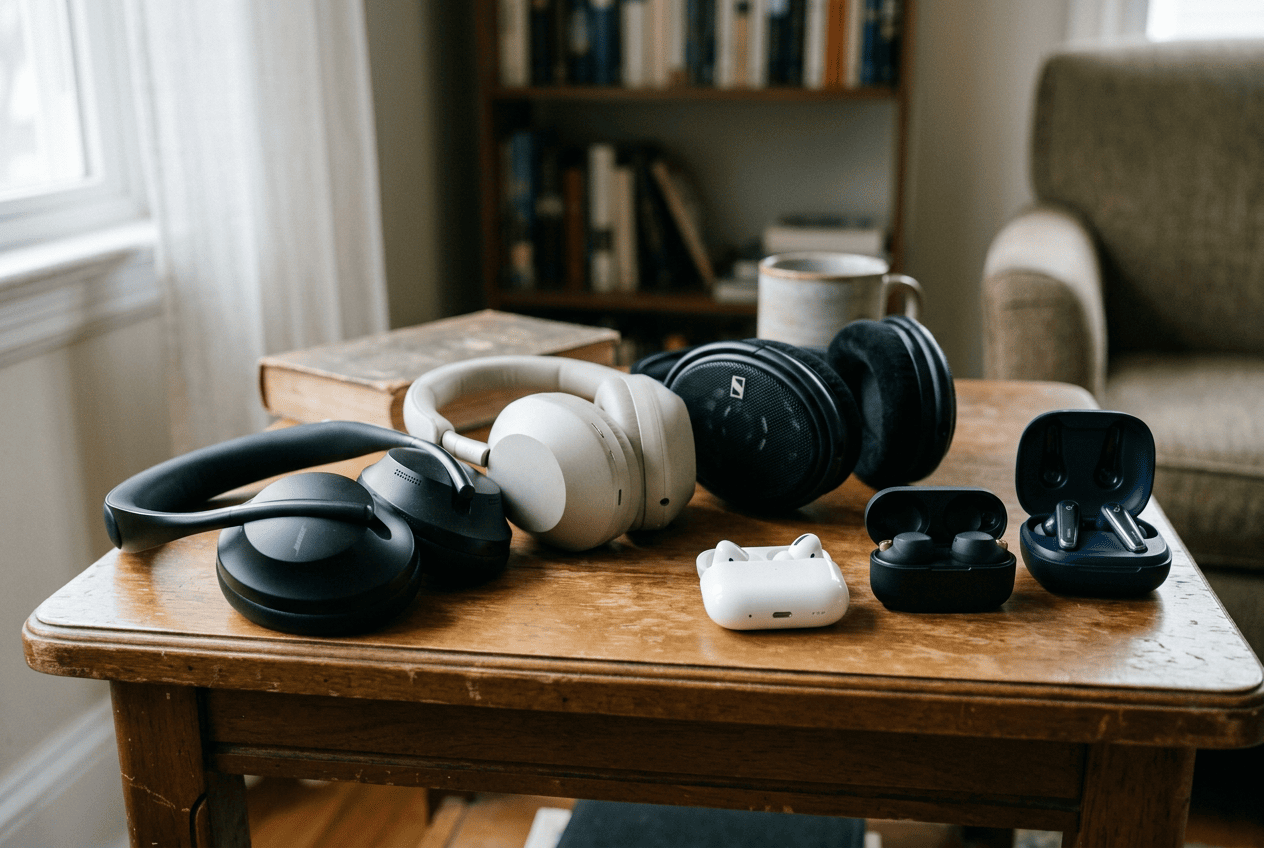
The Sony WH-1000XM5 (~$279) is my top over-ear pick. Thirty dB of real-world ANC reduction, excellent passive seal, and a frequency range of 8 Hz to 20 kHz. For tinnitus masking during the day, nothing I’ve tried at this price beats it. The Jabra Evolve2 55 (~$339) is designed for all-day office wear and provides 43 dB of combined passive and active isolation. It’s more than most people need, but if you’re in a loud work environment all day, it’s worth the price. The Anker Soundcore Q45 (~$55) is the budget over-ear option. Anker claims 40 dB of ANC. Real-world measurements put it closer to 18 dB. It’s fine for a quiet room. I wouldn’t trust it on a subway.
For earbuds: the Bose QuietComfort Earbuds II (~$199) are the only in-ears I’d recommend to a tinnitus sufferer without a lot of caveats. Rtings.com measured them at 6 dB better real-world ANC performance than their nearest earbud competitors. That gap matters. The Apple AirPods Pro 2 (~$189) have a feature called Adaptive Transparency that reduces sharp transient sounds — sudden loud noises that can trigger tinnitus spikes — which is genuinely useful and underrated. The budget earbud option, the EarFun Air Pro 3 (~$55), claims 43 dB of ANC. Independent measurements from Rtings put real-world performance at about 22 dB. Still decent for the price, but know what you’re actually buying.
I’d skip any earbud not on this list for tinnitus use. The QC Earbuds II are the one earbud I trust, and even then only after you’ve confirmed ANC pressure doesn’t aggravate your symptoms.
Seal quality matters more than whether it’s over-ear or in-ear
This is the thing I get genuinely frustrated about when I read other tinnitus guides. Everyone talks about the headphone. Nobody talks about the fit.
A poorly-seated earbud with a broken seal provides almost zero passive isolation. When the seal fails, ambient noise floods in, and your brain tells you to turn the volume up. That’s where the damage happens — not from the form factor, but from the instinctive volume compensation that bad fit causes.
Using the wrong eartip size reduces passive isolation by up to 12 dB. Most people are using medium tips because medium is what’s already on the earbud in the box. A lot of ears need large, or a different shape entirely. SpinFit CP145 tips run about $12 and genuinely improve seal for most in-ear designs. I learned this the expensive way, after assuming the stock tips were fine for over a year. Foam tips like Comply T-400s increase passive isolation by 5 to 7 dB compared to silicone. That’s real. That’s meaningful for a tinnitus sufferer.
For over-ear headphones, the glasses problem is significant and almost never discussed. If you wear glasses, acoustic leak studies suggest you’re losing 6 to 12 dB of passive isolation because the temple arm breaks the seal at the ear cup. Thinner frames help. Some people rotate to contacts for long listening sessions. It’s a total pain, but it’s a real variable.
The quick field test I use: put your headphones on in a noisy environment and don’t turn anything on. If you can hear the ambient noise clearly, your seal has failed. I call it the subway test. If you can hear the train, your setup is already working against you.
When tinnitus is caused by hearing loss, masking with audio is the wrong tool
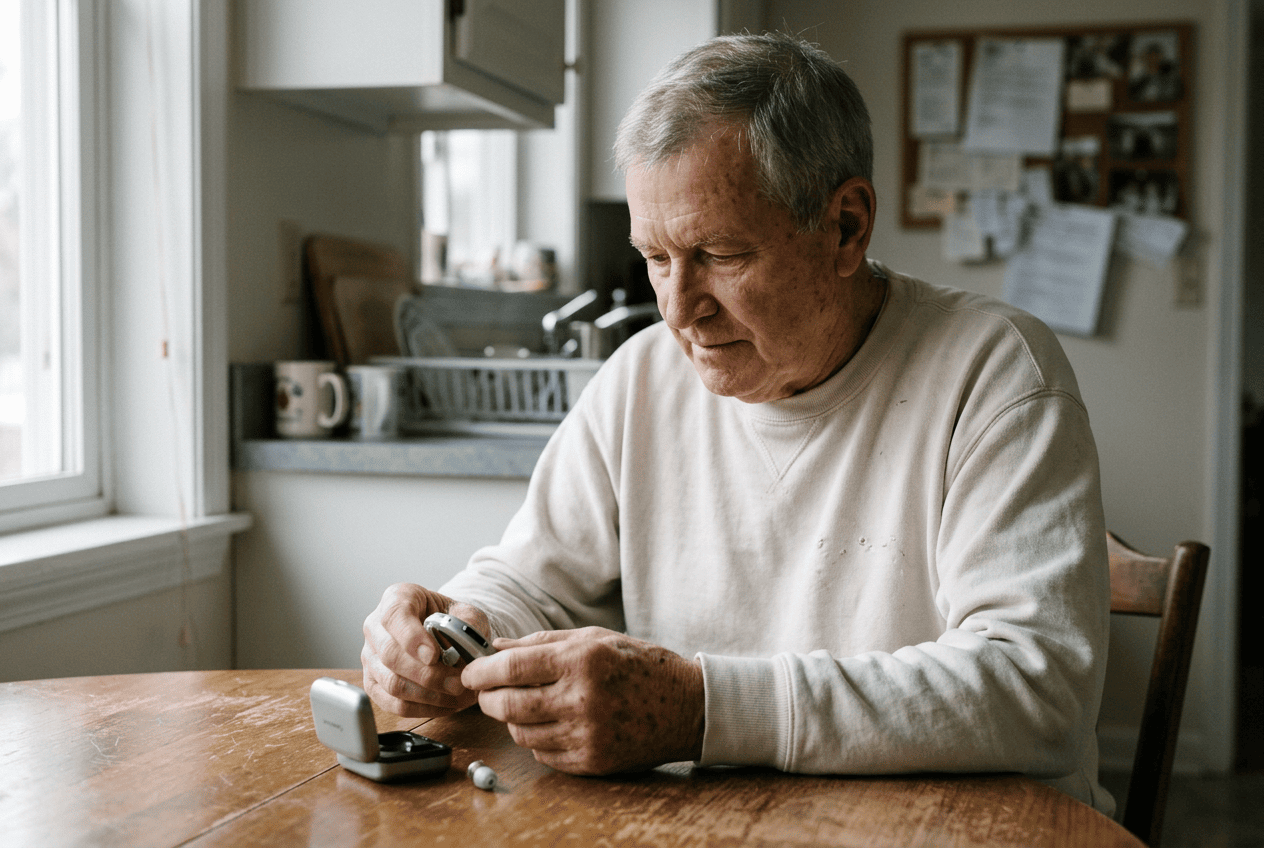
Using consumer headphones to mask tinnitus caused by noise damage is like taking ibuprofen for a broken bone. It addresses the perception. It does nothing for the pathology. And it can delay treatment that would actually help.
About 55 to 60% of tinnitus cases are noise-induced, per American Tinnitus Association data. But tinnitus also shows up in Meniere’s disease, presbycusis (age-related hearing loss), and somatic conditions. A Meniere’s patient and a retired construction worker with noise damage need completely different interventions. Most consumer audio advice treats them identically.
Audiologists sometimes use residual inhibition therapeutically. A masking tone delivered at just 1 dB above the tinnitus pitch for 60 seconds can briefly suppress tinnitus perception after the sound stops. That’s a clinical protocol, done at controlled levels with known tinnitus frequency data. It’s not the same as sleeping with a podcast on.
If your tinnitus is noise-induced and mild, the steps covered here are relevant. If it’s Meniere’s-related or accompanied by one-sided hearing loss, stop reading headphone reviews and see an audiologist. Hearing aids with integrated tinnitus maskers run $1,500 to $6,000 per ear, which I know is painful, but the Widex Moment includes built-in fractal tinnitus therapy tones that are meaningfully different from anything a consumer earbud does. Some things are worth taking seriously as medical issues rather than gadget problems.
The listening habits that make any headphone dangerous
Hardware matters less than behavior. That’s not a comfortable thing to say in an article about hardware, but it’s true.
Volume creep during commutes is where I’d put most of the blame. The New York City subway averages 80 to 90 dB of ambient noise. When you step onto that platform, your brain wants audio loud enough to compete. Even with decent headphones, that reflex pushes your listening level into damaging territory fast. No product recommendation fixes this without you actively choosing not to use headphones in that environment, or using ANC effective enough to drop the noise floor before you set your volume.
The 60/60 rule from the American Speech-Language-Hearing Association — 60% max volume for 60-minute sessions — is genuinely good advice in a quiet room. It does not protect you at 60% volume on an iPhone in an 85 dB subway car. That works out to approximately 82 dB at the eardrum, depending on your headphone. That exceeds the two-hour threshold for measurable cochlear stress.
Temporary threshold shift is the symptom most people ignore. Muffled hearing after a listening session, usually resolving within 16 to 48 hours. That muffling is cochlear stress — your ears telling you something. And if it keeps happening, the cumulative damage eventually becomes permanent.
Sleeping with audio is its own category. Bose Sleepbuds II cap output at 70 dB, which is why they’re one of the few sleep audio products I’d endorse. Sleeping with regular earbuds playing whatever you fell asleep to is genuinely risky, partly because you’re not conscious to notice discomfort.
What to actually do: a checklist with real thresholds
Before you spend anything, measure what you’re already doing. Download the NIOSH SLM app, put your current headphones on at your usual volume, and check the reading. Your target for extended sessions is an average below 70 dB. If you’re above 80 dB regularly, that’s the problem — not which headphones you own.
Check your seal. Run the subway test. If it fails, try a different eartip size or foam tips before buying anything new.
Decide whether ANC is tolerable for you. Spend an hour in full ANC mode and notice whether you feel pressure or perceive your tinnitus differently. If it bothers you, stick with passive isolation or use Transparency mode instead.
Set a volume limit in your device. On iOS: Settings > Sounds & Haptics > Headphone Safety, set the limit to 75 dB. On Android: Settings > Sound > Media Volume Limiter, enable at 80 dB or below. Do this today, before any other step.
If your budget allows one purchase, the Sony WH-1000XM5 at $279 is the over-ear pick. For earbuds, the Bose QC Earbuds II at $199, but only if ANC pressure is comfortable for you. Under $60, the Anker Q45 for over-ear and the EarFun Air Pro 3 for earbuds — both with realistic expectations about their actual ANC performance.
If your tinnitus has persisted for more than three months, or if it’s louder in one ear than the other, stop managing this with hardware and see an audiologist specifically. Not your GP, not the urgent care clinic. An audiologist. That combination of duration and asymmetry can indicate something that needs a proper diagnostic workup, and no eartip or ANC setting addresses it.
Our picks

- 3 levels of world-class noise cancellation for better listening experience in any environment
- Alexa-enabled for voice access to music, information, and more
- Noise-rejecting dual-microphone system for clear sound and voice pick-up
$149.99
Paid link · price checked October 22, 2026 09:32

- POWERFUL NOISE CANCELLING HEADPHONES: 11 levels of active noise cancelling let you enjoy music, podcasts, videos and calls without distractions
- ASTONISHING SOUND: Crisp, clear details. Deep, full bass. These wireless headphones produce exciting, lifelike sound that’s full and balanced at every volume level
- UNRIVALED VOICE PICKUP: A revolutionary microphone system adapts to noisy and windy environments so your voice always sounds crystal clear on calls
$149.95
Paid link · price checked October 22, 2026 09:32

- 𝗙𝗮𝗻 𝗕𝗮𝘀𝗲𝗱 𝗦𝗼𝘂𝗻𝗱 𝗠𝗮𝗰𝗵𝗶𝗻𝗲: 1 fan sound with constant noise from a real fan (no digital sounds, no recordings). Natural, non-looping white noise designed to mask disruptions and improve sleep quality.
- 𝗔𝗽𝗽 𝗘𝗻𝗮𝗯𝗹𝗲𝗱: Use the free app to schedule auto on/off at bedtime and wake-up. Build a healthy sleep routine and use the app as a digital remote to control from anywhere in the room.
- 𝟭𝟬 𝗩𝗼𝗹𝘂𝗺𝗲 𝗟𝗲𝘃𝗲𝗹𝘀: Effectively mask noisy neighbors, city street noise, snoring partners, barking dogs, office privacy, and other nighttime disturbances for a peaceful sleep.
$99.99 In Stock
Paid link · price checked October 22, 2026 09:32